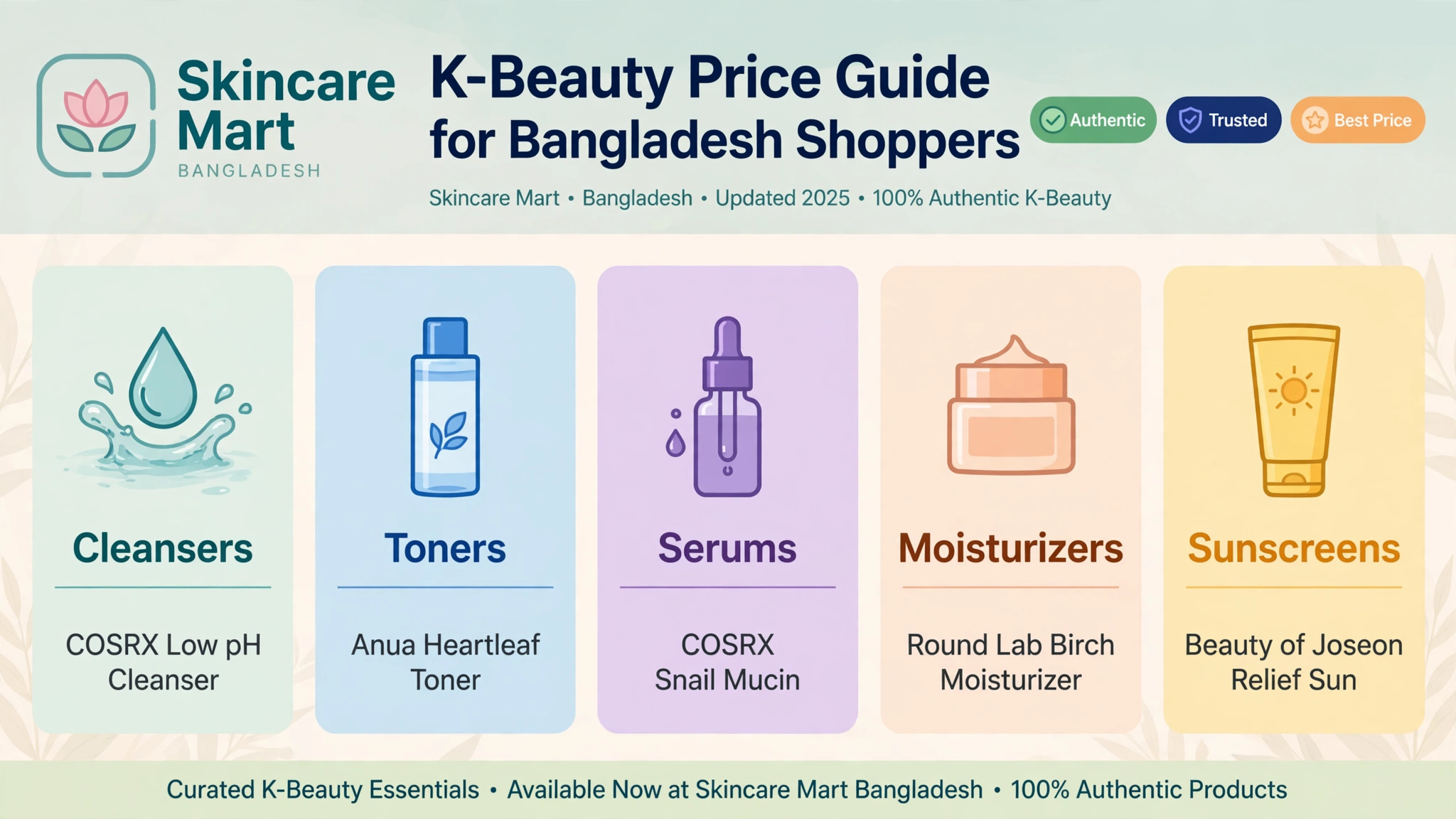
The same Korean serum can appear at very different prices across Bangladesh, sometimes within the same city and the same week. Without knowing why, it is easy to either overpay or fall for a deal that is too good to be true. This guide explains what shapes K-beauty prices here and how to judge value without relying on a single number.
Quick answer: K-beauty prices in Bangladesh vary mainly with the import route, customs and tax costs, exchange rates, storage, and remaining shelf life. Compare products by cost per millilitre and by how long they will last, spend more on sunscreen than on cleanser, and treat a price far below other sellers as a warning sign rather than a bargain.
Who this guide is for
This guide is for shoppers building or refilling a Korean skincare routine in Bangladesh who want a way to judge prices that will still make sense next month. It deliberately avoids quoting specific taka prices, because prices change often and differ by seller, size, and batch. Check each product page for the current price and details before you order.
Why K-beauty prices differ in Bangladesh
Sellers quoted by bdnews24 say most beauty products sold in Bangladesh are imported, and that even local brands rely heavily on imported raw materials. Several factors then shape the price you see:
- Import route: Stock from an official distributor, a direct brand import, or a personal or informal import can all be priced differently, and the route also affects how well the product is traced and stored.
- Customs and taxes: Duties, VAT, and minimum customs valuations change with each national budget, and Dhaka Tribune has noted that proposed tariff changes typically take effect immediately, so hikes often feed through to retail prices.
- Exchange rates: Korean products priced in other currencies move with the taka, so the same item can cost more after a currency shift.
- Shipping and storage: Transport, handling, and climate-aware storage all add cost, and cheaper handling can mean more risk for heat-sensitive products.
- Shelf life remaining: Stock close to its expiry date is sometimes discounted, which can be a legitimate reason for a lower price if it is disclosed.
- Pack size and edition: Travel sizes, bundles, refills, and limited editions are priced differently from the standard bottle, so compare like with like.
The tax picture: what to know and what to check
Recent budgets have moved in different directions, and the details change. Prothom Alo reported that the FY2025-26 budget raised customs valuations for cosmetics used on the lips, eyes, and face, with higher import taxes and higher prices expected. The Bangladesh Cosmetics and Toiletries Importers Association warned the increases could encourage smuggling, and cited a seizure of smuggled cosmetics in Sylhet. For FY2026-27, bdnews24 and The Observer reported a proposal to cut a 30 percent supplementary duty on two raw materials used by local skincare and beauty makers to 10 percent, which would mainly affect locally produced products.
Proposals can differ from the final rates, and the effect on shelf prices is not automatic, so treat these as background, not a price forecast. If cost matters a lot to you, check current duties with the relevant authority or the seller before making a large order.
What different price signals can mean
| What you see | What it may mean | What to do |
|---|---|---|
| Price in line with other reputable sellers | A normal supply chain | Check dates and codes as usual |
| Slightly lower, with clear expiry shown | Possibly nearer-expiry stock or a promotion | Confirm the date and whether you can finish it in time |
| Much lower than everyone else | Possible counterfeit, grey-market, damaged, or expired stock | Ask about sourcing and dates, and consider walking away |
| Much higher than other sellers | Possible overcharging, a rarer edition, or a different pack size | Compare cost per ml and check the exact size and edition |
| Same price whatever the size | Possibly a mislabeled or smaller pack | Check the volume printed on the product page |
How to compare value properly
A bigger price tag does not mean worse value, and a smaller one does not mean a bargain. Use these checks instead:
- Cost per millilitre or gram: divide the price by the volume or weight, and compare products on that figure rather than on the sticker price.
- Cost per month of use: estimate how long a product lasts at one or two applications a day, and divide the price by the months it will realistically last.
- Usable life: a large bottle is no bargain if you cannot finish it before the printed expiry or the period after opening shown on the pack.
- Same product, same size: confirm the edition, volume, and batch dates match before comparing two listings.
Where to spend and where to save
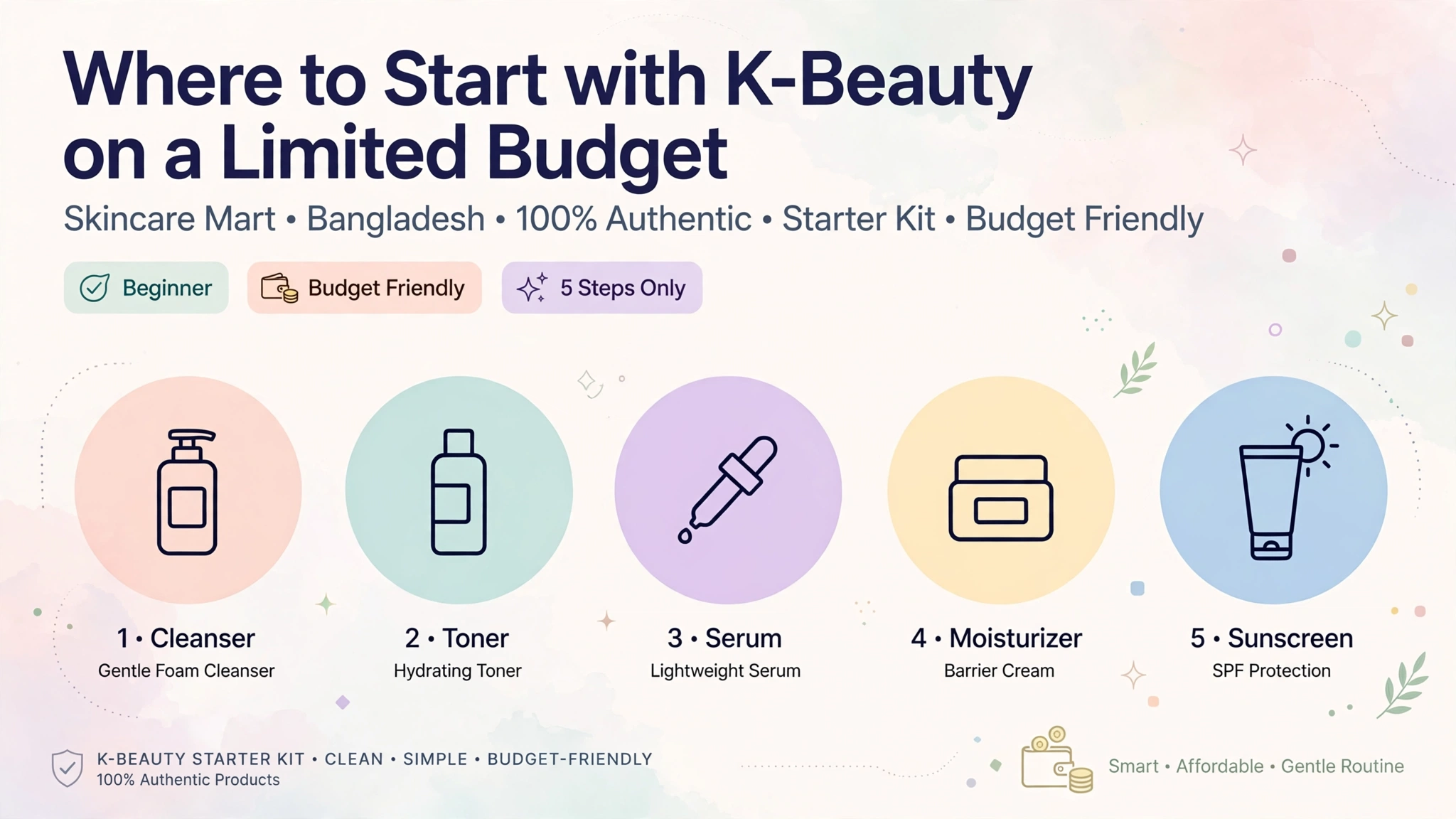
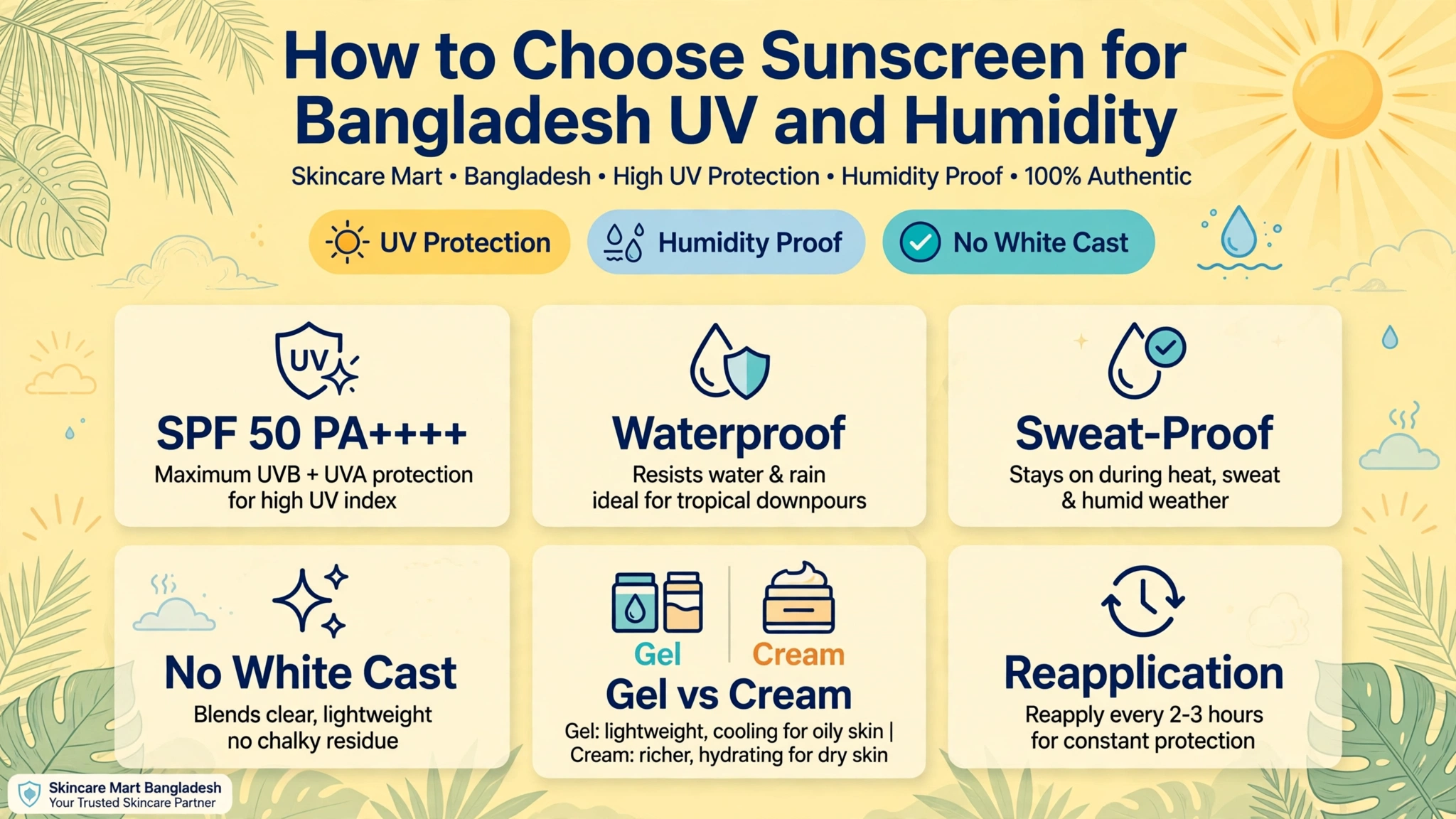
Dermatologists interviewed in budget-skincare guidance commonly say cleanser is one of the easiest places to save, because it is rinsed off within seconds. They often suggest moisturizers can be chosen by ingredient list rather than brand, and that sunscreen is the product most worth prioritizing if your budget allows, because consistent, comfortable daily use matters most. A basic routine of cleanser, moisturizer, and sunscreen covers the essentials, and extra steps like toners, essences, and serums can be added one at a time when a specific goal calls for them.
Bangladesh climate context
Heat and humidity make price and quality hard to separate. Products stored in hot warehouses or left in transit can degrade before their printed dates, particularly sunscreens, vitamin C, and retinoids, so a cheap price with poor storage can cost you more in wasted product and irritated skin. Buying sizes you will finish within the period after opening, and checking the remaining shelf life when you buy, protects your money better than chasing the lowest price.
A smarter way to shop on price
- Decide the three or four products you truly need before you start browsing.
- Compare the same product, size, and edition across at least two or three reputable sellers.
- Work out cost per ml and cost per month for each option.
- Check the batch code, expiry date, and period-after-opening symbol on the product page or in photos from the seller.
- Ask how stock is sourced and stored if the price is far from the normal range.
- Add new products one at a time, and keep your receipt and photos in case you need to raise a complaint.
Mistakes and cautions
- Chasing the lowest price. A price far below the market is more often a warning sign than a deal.
- Comparing different sizes by sticker price. Always compare on cost per ml or gram.
- Buying a big size you cannot finish. Expiry and the period after opening limit how much value a large pack gives you.
- Treating import tax news as a price forecast. Proposals can change, and retail prices do not always follow.
- Skimping on sunscreen to afford extra steps. A simple routine with reliable sun protection usually beats a longer one without it.
- Ignoring skin reactions to save money. Stop using any product that irritates your skin and see a qualified clinician if it persists.
Frequently asked questions
Why does Korean skincare cost more in Bangladesh than in Korea?
Imported products carry shipping, customs duties, taxes, storage, and seller margins on top of the original price, and currency movements add to the difference. The size of the gap varies by product and seller, so compare current listings rather than relying on a general rule.
Is a very cheap K-beauty product always fake?
Not always, since genuine promotions and near-expiry stock exist, but a price far below others is a common warning sign. Ask the seller to explain the price, and check the expiry date and batch code before you buy.
How do I compare two products of different sizes?
Divide each price by the volume or weight, and compare the cost per millilitre or gram. Then consider how long each will last in your routine and whether you can finish it before it expires.
Where is it worth spending more?
Dermatologists commonly point to sunscreen as the product most worth prioritizing, while cleanser is usually an easy place to save. Moisturizer can often be chosen by ingredients and not brand.
Do budget changes make skincare cheaper or more expensive?
It depends on the budget and the product. Recent budgets have raised customs valuations on some imported cosmetics and proposed cuts on duties for local makers' raw materials, but final rates can differ from proposals and retail prices do not always follow.
Is it worth buying in bulk to save money?
Only if you can use the product before its expiry and the period after opening has passed, since expired skincare can irritate skin and sunscreen may stop protecting as labeled. A smaller size you finish is better value than a larger one you waste.
Spending with confidence
Good value in K-beauty means paying a fair price for an authentic, in-date product you will actually finish, not finding the lowest number on the screen. Compare on cost per ml, check dates and codes, and build your routine one product at a time. Browse Skincare Mart and check each product page for the current price, size, and batch and expiry details before you order.