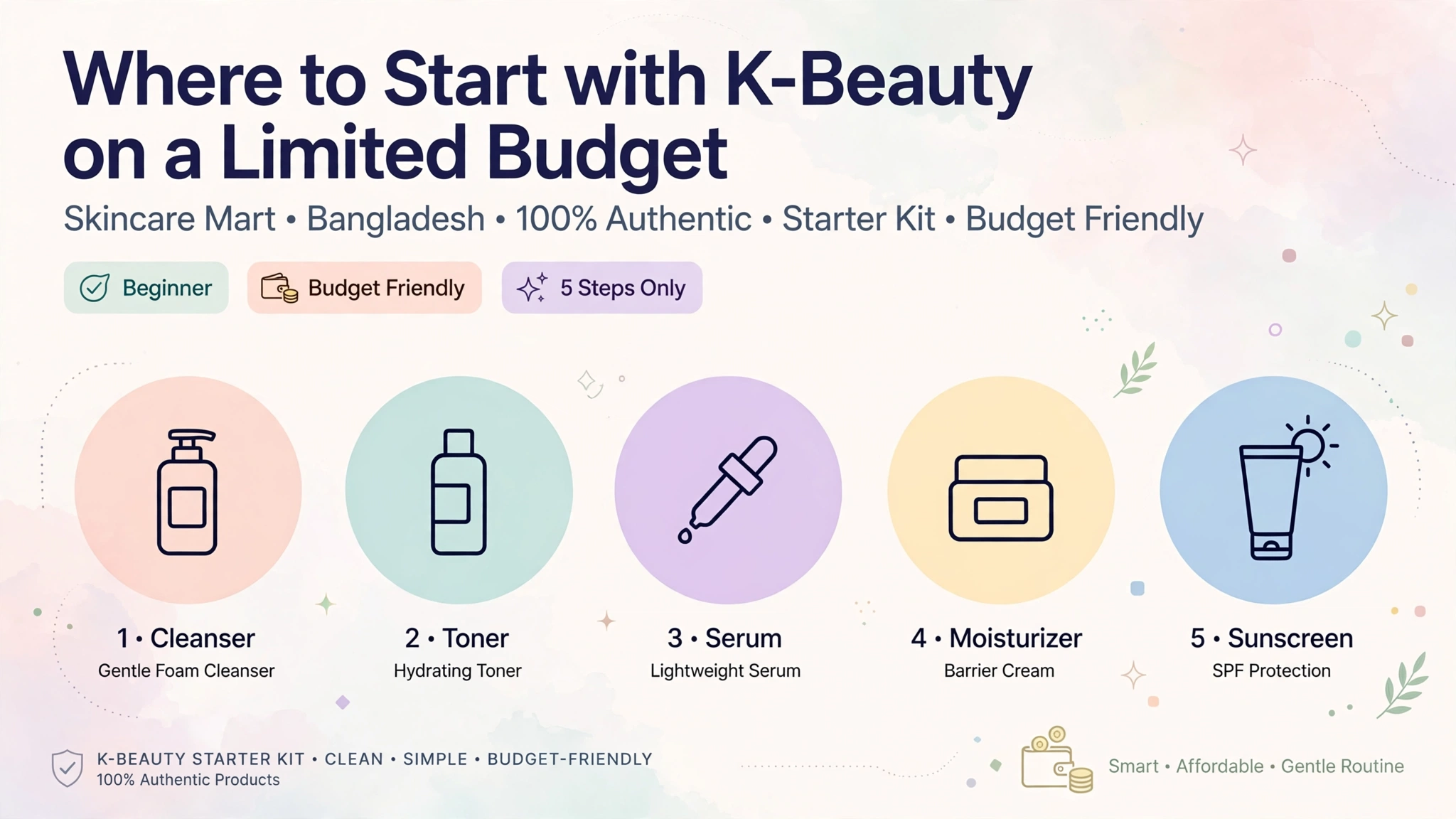
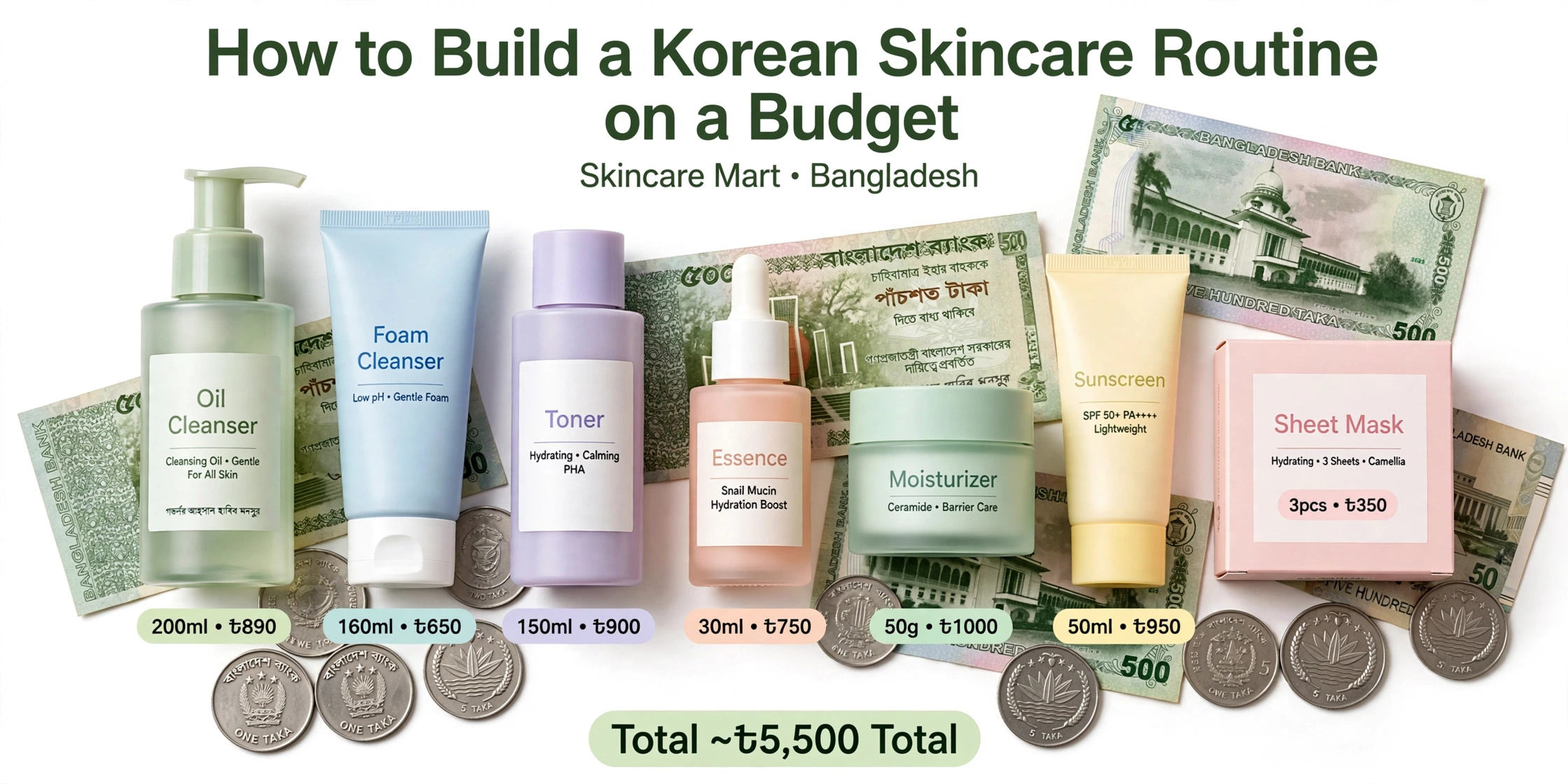
A shelf full of Korean skincare can look expensive fast, especially once toner, essence, serum, ampoule, and sheet masks all get added to the cart. The good news, according to dermatologists who are regularly asked this exact question, is that an effective routine doesn't require most of that — and the few products that do matter aren't the ones worth spending the most on.
Quick answer: A budget Korean skincare routine needs three non-negotiable steps — cleanser, moisturizer, and sunscreen — with toner, essence, and serum as optional add-ons once the basics are in place. Dermatologists consistently advise saving money on cleanser, since it's rinsed off within seconds, and prioritizing spend on sunscreen, since sun protection has the clearest long-term payoff of any skincare category. Ingredients matter more than brand name or price point for nearly every step.
Who this guide is for
This is for anyone starting or rebuilding a Korean skincare routine who wants to spend intentionally rather than buying every step of a 10-step routine at once. It's general guidance, not a substitute for a dermatologist's advice if you're managing acne, eczema, or another diagnosed skin condition — treatment-grade products for those conditions are a different budget conversation, and this article makes no claim that any product treats or cures a medical skin condition.
Where dermatologists say to save — and where to spend
Multiple dermatologists interviewed on this exact question converge on the same pattern: cleanser is the easiest place to save, because it sits on skin for only seconds before being rinsed away, so an expensive formula offers little extra benefit over a gentle, fragrance-free budget one. Moisturizer is often flagged as save-able too, with dermatologists pointing out that ingredients — glycerin, dimethicone, ceramides, hyaluronic acid — matter more than the brand name. Sunscreen is the one category dermatologists most often say is worth spending more on if your budget allows, since consistent, high-quality sun protection has the clearest payoff for preventing long-term skin damage; that said, SPF labeling is regulated, so an inexpensive SPF 30 sunscreen still delivers the labeled protection — the "splurge" advice is about comfort, texture, and consistency of use, not proof that pricier sunscreen protects better.
The essential 3-step routine
- Cleanser: A gentle, fragrance-free, low-foam cleanser suited to your skin type. This is where a basic, inexpensive option performs just as well as a premium one for most people.
- Moisturizer: Choose by ingredient list — glycerin, ceramides, or hyaluronic acid — rather than price or packaging.
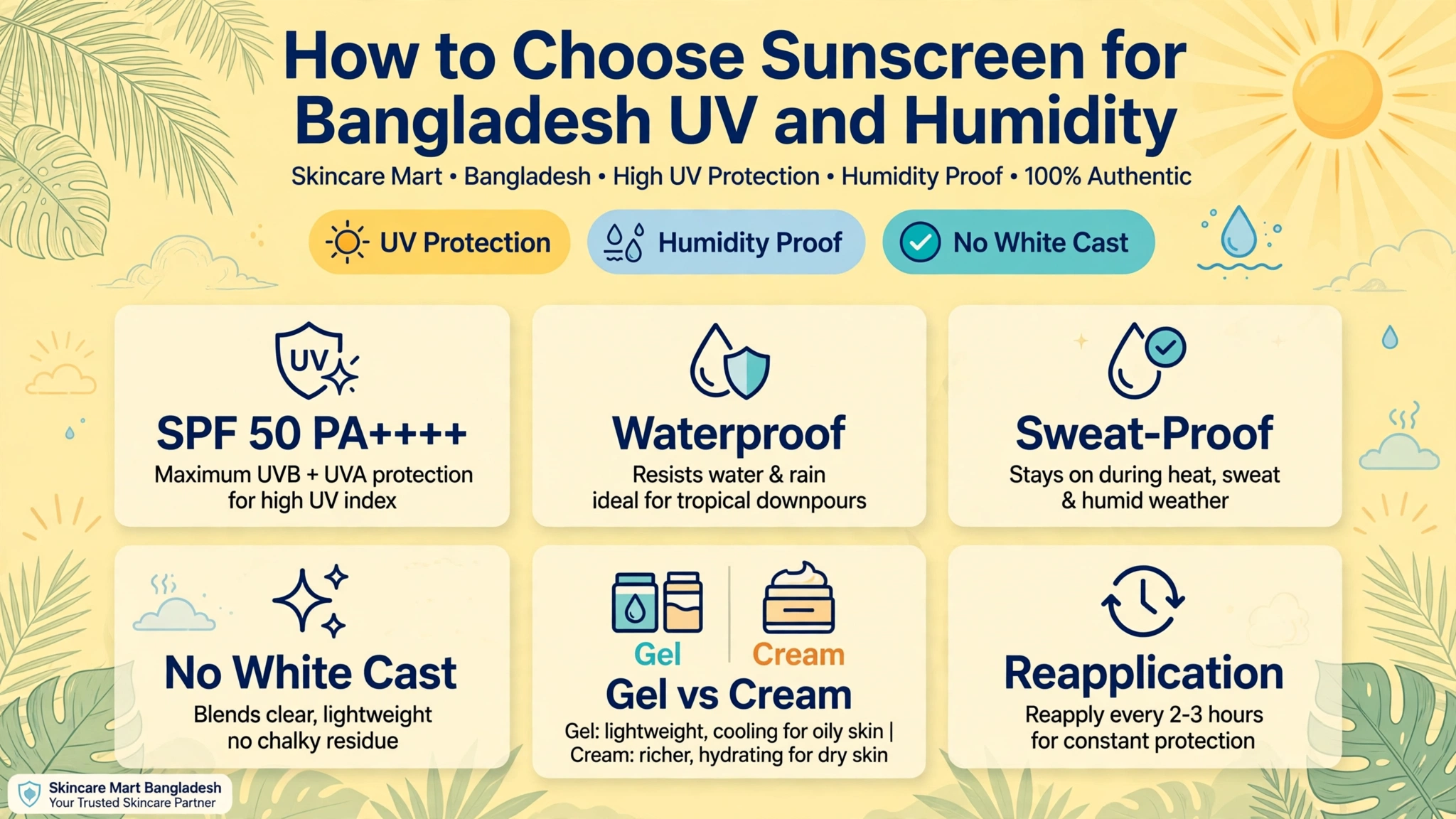
- Sunscreen: Broad-spectrum, SPF 30 or higher. If your budget stretches further for one product, dermatologists suggest this is the one worth it — but a basic SPF 30 sunscreen used consistently still beats an expensive one used occasionally.
A dermatologist quoted on this exact topic put it plainly: when you strip a routine down to what's "absolutely critical," it's a good cleanser, a good moisturizer, and a good sunscreen — not the ten-plus steps a full Korean routine can include.
Adding K-beauty steps once the basics are covered
Toner, essence, and serum are genuinely optional in Korean skincare guidance for beginners — useful for specific goals (hydration layering, brightening, oil control) but not required to see results from the basics. If your budget allows one add-on, a simple hydrating toner or a single targeted serum (niacinamide for oil and pore appearance, for example) offers more practical value than several specialty products bought at once. Add one new product at a time and give it a couple of weeks before judging whether it's worth the repeat purchase.
Bangladesh buying context
A few local factors are worth building into a budget routine:
- Buy sunscreen and moisturizer as the priority spend. Bangladesh's climate means both get used daily, year-round — the products you'll actually run out of and repurchase fastest are the ones worth prioritizing in the budget.
- Skip products bought only because they trended online. Sheet masks, essences, and ampoules can be added later if your skin genuinely benefits from them, rather than bought upfront to "complete" a routine.
- Check that a product is authentic before buying based on price alone. An unusually low price on a well-known brand is worth double-checking against the seller's authenticity guarantee rather than assuming it's simply a good deal.
Budget-routine selection checklist
| Step | Budget priority | What to check on the label |
|---|---|---|
| Cleanser | Save here first | Fragrance-free, gentle, suited to your skin type |
| Moisturizer | Save here too, unless skin is very dry or sensitive | Glycerin, ceramides, hyaluronic acid, dimethicone |
| Sunscreen | Spend here if your budget allows | Broad-spectrum, SPF 30 or higher, texture you'll actually use daily |
| Toner/essence/serum | Optional add-on, add one at a time | A specific active matched to a specific goal, not a general "hydration" claim alone |
How to introduce a budget routine without wasting products
Start with the 3-step essentials for two to four weeks before adding anything else — this makes it easier to judge whether an add-on is actually needed, rather than buying based on marketing. Patch-test any new leave-on product for 24 to 48 hours before applying it to your full face, and apply products from thinnest to thickest texture: toner before serum, serum before moisturizer, moisturizer before sunscreen.
Mistakes and cautions
- Buying a full 10-step Korean routine at once. This is the single most common way a "budget" routine ends up expensive — and unused products are wasted money regardless of price.
- Assuming a higher price means better protection or results. This holds least true for sunscreen, where SPF labeling is regulated, and least reliably true for cleanser, which barely contacts skin before rinsing.
- Skipping sunscreen to save money. Of all the categories here, this is the one dermatologists most consistently say is worth prioritizing, even on a tight budget.
- Choosing products by trend rather than skin type or ingredient list. A product that works well for someone else's skin type may not suit yours regardless of its popularity.
Frequently asked questions
What are the only products I really need to start?
A gentle cleanser, a moisturizer suited to your skin type, and a broad-spectrum SPF 30+ sunscreen. Everything else in a Korean routine — toner, essence, serum — is an optional addition, not a requirement.
Is it okay to buy a cheap cleanser?
Yes — dermatologists specifically flag cleanser as one of the easiest places to save, since it's rinsed off within seconds and doesn't sit on skin long enough for a premium formula to make a meaningful difference for most people.
Should I spend more on sunscreen than other products?
If your budget allows, sunscreen is the product dermatologists most often suggest prioritizing, mainly for comfort and texture that keeps you using it daily — a basic SPF 30 sunscreen used consistently is more protective than an expensive one used occasionally.
Do I need a separate toner and essence, or can I skip both?
You can skip both when starting out. They're optional hydration layers in Korean skincare, useful once your basics are working well, but not necessary for an effective routine.
How do I know if a product is worth adding to my routine later?
Match it to a specific goal — oil control, brightening, hydration — rather than adding it because it's popular, and give it a couple of weeks of consistent use before deciding whether it's earning its place in your routine and budget.
Is an expensive moisturizer better than a cheap one?
Not necessarily. Dermatologists point to specific ingredients — glycerin, ceramides, hyaluronic acid, dimethicone — as the meaningful factor, not brand name or price, when it comes to moisturizer performance for most skin types.
Getting started
A working Korean skincare routine on a budget starts with three products, not ten: a gentle cleanser, a fitting moisturizer, and a sunscreen you'll actually use every day. Add toner, essence, or a targeted serum only once the basics are consistent and only when a specific goal calls for it. Browse Skincare Mart's cleanser, moisturizer, and sunscreen categories to build this routine step by step, and check each product's ingredient list on its page as you decide where to spend and where to save.