Monsoon in Bangladesh changes more than your commute. Constant dampness, wet clothes, flooded streets, and heavy humidity put pressure on your skin and feet, and the products that worked in dry weather can start to feel heavy or irritating. A shorter, lighter shopping list usually works better than adding more steps.
Quick answer: For monsoon in Bangladesh, shop for a gentle cleanser (optionally one with salicylic acid if you are breakout-prone), a lightweight non-comedogenic moisturizer, and a broad-spectrum sunscreen with SPF 30 or higher and PA+++, applied every day even when it is cloudy. Skip heavy creams and heavy makeup, and see a dermatologist for itchy bumps that do not respond to normal acne care.
Who this guide is for
This guide is for shoppers who want a practical monsoon shopping list for face and body care. It is general guidance, not a diagnosis or a treatment plan. Itchy rashes, persistent bumps, spreading patches, or foot infections need a clinician's assessment, and people with diabetes or small cuts on their feet should take foot problems especially seriously.
Why monsoon changes your skin
Dr Sifat Saba, an aesthetic dermatologist interviewed by The Daily Star, explains that when skin stays damp and soft for too long, its natural barrier weakens, which makes it easier for fungi and bacteria to enter and grow. She also notes that humidity stimulates the oil glands, and that sweat and dirt then clog the pores, which is why monsoon tends to bring oilier skin and more breakouts, especially in people who are already acne-prone. A hospital-based study in Bangladesh likewise recorded a peak in skin conditions during the monsoon months.
Your monsoon shopping list
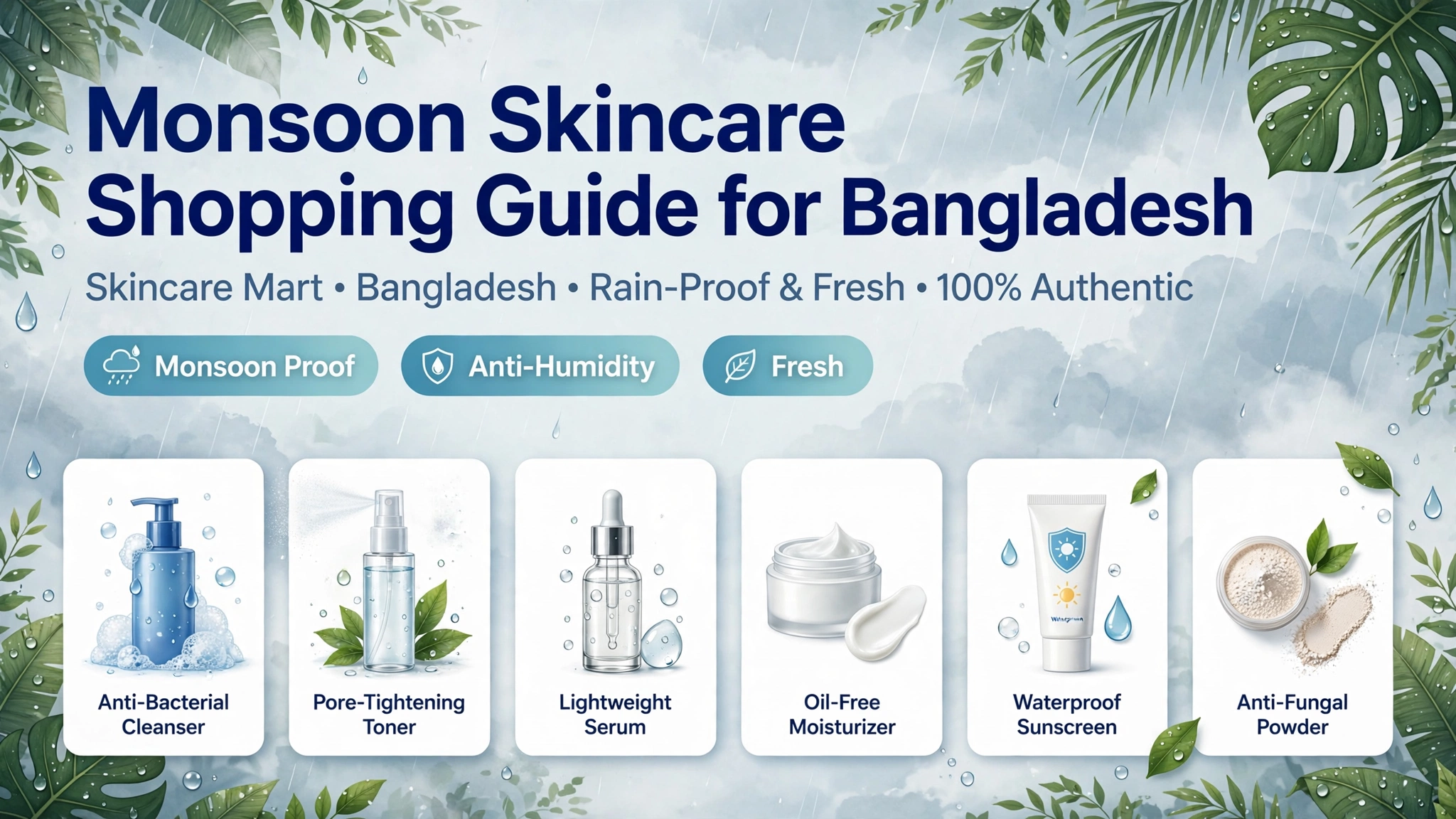
| Product | What to look for | Skip or go easy on |
|---|---|---|
| Cleanser | A gentle formula; for oily or breakout-prone skin, a salicylic acid face wash, as suggested by Dr Saba | Harsh scrubs and over-washing, which can make oily skin worse |
| Moisturizer | A lightweight, non-comedogenic gel or lotion | Heavy creams and balms, including rich winter creams |
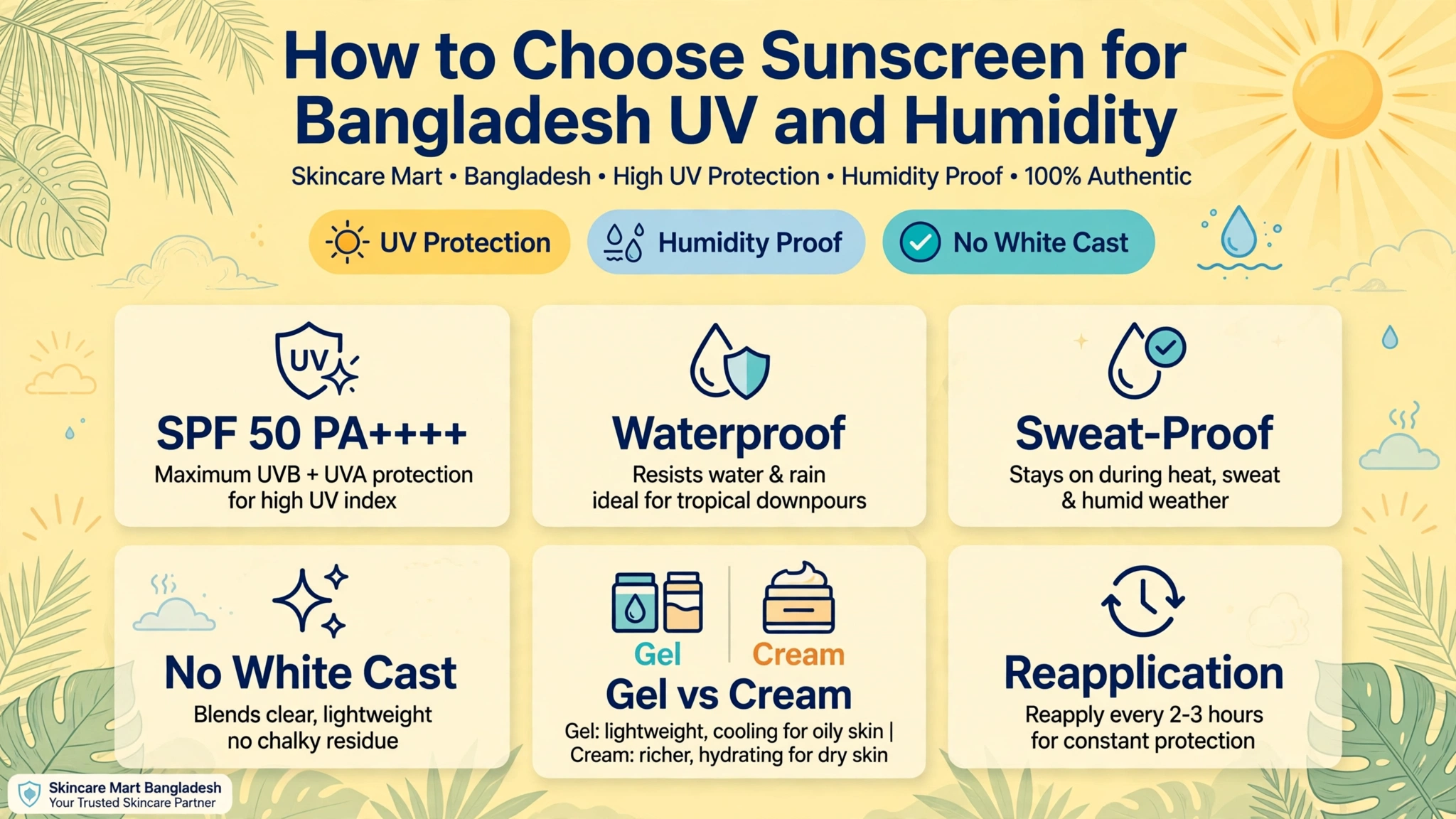
| Sunscreen | Broad-spectrum SPF 30 or higher with PA+++ (the level Dr Saba recommends), in a light texture you will reapply | Skipping it because the sky is cloudy |
| Makeup | As little as possible, and light formulas if you wear it | Heavy, long-wear foundation that sits on sweaty skin |
| Foot care | Soap, a clean towel, and an antifungal powder or cream if you are prone to infections, ideally after checking with a pharmacist or clinician | Reusing wet shoes the next day |
Sunscreen still matters when it is cloudy
People often assume clouds protect them. Dr Saba told The Daily Star that around 80 percent of UV rays still reach your skin through clouds, and that UVA in particular contributes to pigmentation, ageing, and over the long term skin cancer. She recommends broad-spectrum SPF 30 or higher with PA+++, and says even people who are mostly indoors need protection near windows or screens.
The American Academy of Dermatology advises reapplying sunscreen about every two hours when you are outdoors and after sweating. If a product says "water-resistant", check the label for how long that lasts, because the claim covers a limited time and not the whole day. In monsoon, a lightweight texture that you are willing to reapply beats a heavy one you skip.
Face: oiliness, breakouts, and fungal acne
For oily or breakout-prone skin, Dr Saba suggests keeping the routine simple: a face wash with salicylic acid, a non-comedogenic moisturizer, and a lightweight sunscreen. Over-washing, scrubbing, or layering several actives at once tends to backfire, so add one product at a time and patch-test new leave-on products.
She also cautions that not every monsoon breakout is regular acne. Small, itchy bumps on the forehead, chest, or back that do not respond to normal acne treatment can be fungal acne, also called Malassezia folliculitis, which is caused by yeast and not bacteria. Treatment is different, and she stresses getting the diagnosis right early before trying random products. If your bumps itch, cluster, or do not improve with an ordinary acne routine, see a dermatologist before buying more products.
Body and feet
Monsoon is when many people see foot problems. Dr Saba links walking through dirty floodwater and staying in damp footwear to fungal infections such as athlete's foot, and says peeling skin between the toes, itching, cracks, or a foul smell are signs that something is wrong. Her practical advice includes:
- Wear open or quick-drying footwear when you expect to walk through water.
- Wash your feet with gentle soap and water, and dry them thoroughly, especially between the toes.
- Do not reuse wet shoes the next day.
- Wear breathable fabrics such as cotton or linen, and change out of wet clothes as soon as you can.
Avoid self-treating suspected fungal infections with steroid creams, because they can make some fungal problems worse. If you have diabetes, cuts, or a rash that spreads, see a doctor.
Shopping and storage tips for the rainy season
- Protect parcels from rain: Photograph the sealed package, batch code, and expiry date when it arrives, and note any water damage before opening it.
- Check for authenticity: Counterfeits are a documented problem, with Dhaka Tribune reporting that 17 of 34 imported cosmetic samples in a BSTI campaign were adulterated, unapproved, or substandard, so use a seller who can explain their sourcing.
- Store products dry: Keep them in a cool, dry cupboard away from bathroom steam, windows, and direct sunlight, and close lids and caps firmly after each use.
- Prefer clean application: Where you have a choice, pump bottles and tubes keep fingers and moisture out of the product better than open jars, though this is an editorial suggestion and not a rule.
- Check dates: Look at the expiry date and the period-after-opening symbol, and discard anything that changes in smell, color, or texture.
A simple monsoon routine
- Morning: gentle or salicylic acid cleanser, lightweight moisturizer, then sunscreen.
- During the day: reapply sunscreen about every two hours when outdoors, and dry your face gently if you sweat.
- After rain or sweat: change out of damp clothes, and dry your feet and skin folds thoroughly.
- Evening: cleanse gently to remove sunscreen and the day's dirt, then moisturize lightly.
Mistakes to avoid
- Skipping sunscreen on cloudy days. UV exposure continues, so it remains a daily step.
- Using heavy creams or heavy makeup. These are among the common monsoon mistakes Dr Saba lists.
- Over-washing oily skin. Frequent or harsh washing can trigger more oil and irritation.
- Not drying off properly. Lingering dampness, especially on feet and skin folds, invites infection.
- Treating every itchy bump as acne. If it does not respond to a normal acne routine, get a proper diagnosis.
- Trusting home remedies because they are natural. Dr Saba warns that raw garlic and lemon can cause burns.
Frequently asked questions
Do I need sunscreen when it rains?
Yes. A Dhaka dermatologist notes that most UV still reaches the skin through clouds, so a broad-spectrum SPF 30+ sunscreen is still needed on rainy and cloudy days.
What moisturizer is best for monsoon?
A lightweight, non-comedogenic gel or lotion is usually more comfortable than a heavy cream. Oily skin still needs moisture, because a weakened barrier is more prone to irritation.
Is salicylic acid good for monsoon breakouts?
A salicylic acid face wash is one of the options Dr Saba suggests for oily, breakout-prone skin. Start gradually, avoid layering several actives, and stop if your skin becomes dry or irritated.
How do I know if my breakouts are fungal acne?
Small, itchy bumps on the forehead, chest, or back that do not improve with regular acne treatment may be fungal acne, but only a clinician can diagnose it. See a dermatologist before trying new products.
How should I look after my feet during monsoon?
Wear quick-drying footwear when you expect to walk through water, wash and dry your feet thoroughly, and do not reuse wet shoes. See a doctor if you notice peeling, cracks, itching, or a bad smell.
How should I store skincare in humid weather?
Keep products in a cool, dry place away from steam and direct sunlight, close them firmly, and check the expiry date and period after opening.
Shopping for the season
A good monsoon routine is shorter and lighter than your dry-weather one: gentle cleansing, a light moisturizer, and daily sunscreen, with careful foot and body care. Browse Skincare Mart and check each product page for ingredients, size, and batch and expiry details before you order.