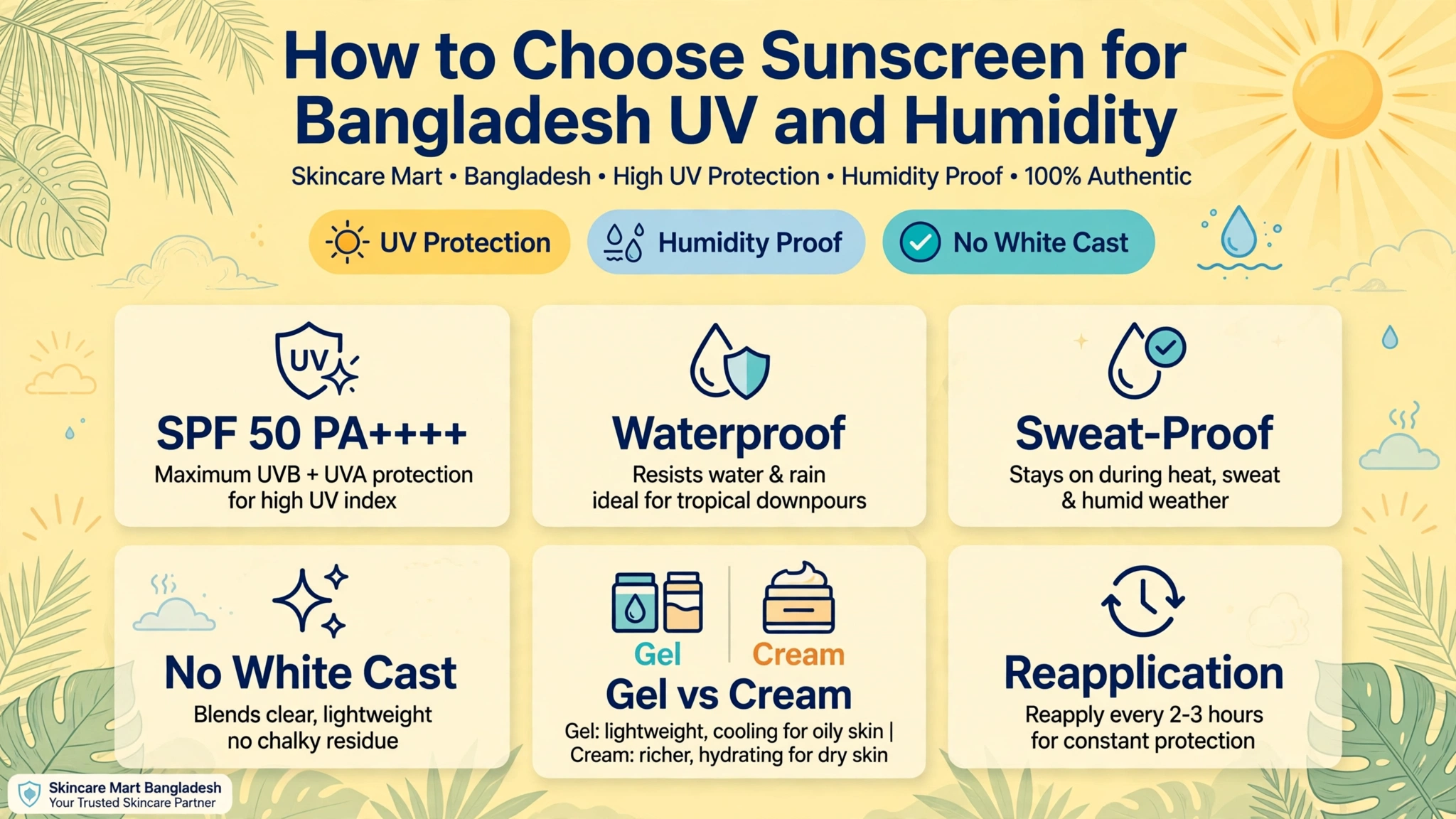
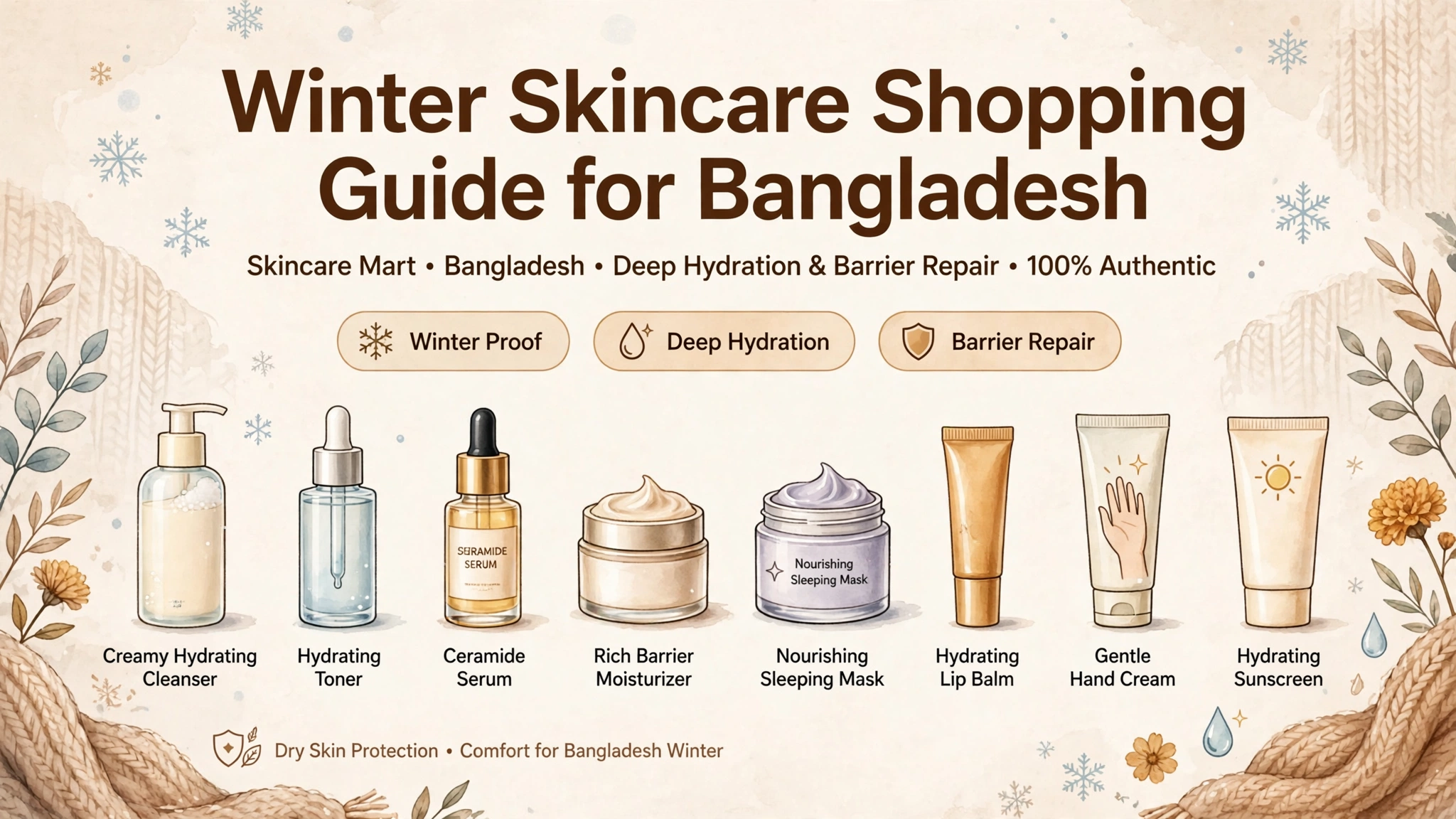
Bangladesh's winter is short, but it is sharp on skin. After months of heat and humidity, the air turns dry almost overnight, and the light gel you relied on in summer can stop being enough. The best time to shop is before the dryness starts, because tight, flaking skin makes it harder to judge what you need.
Quick answer: For Bangladesh's dry winter, buy a gentle fragrance-free cleanser, a thicker cream or ointment for dry areas, a bland lip balm, hand cream, and a daily sunscreen, and look for ingredients such as glycerin, ceramides, shea butter, or petrolatum. Keep baths short and lukewarm, moisturize while skin is still damp, and see a clinician for cracks, oozing, or itching that does not settle.
Who this guide is for
This guide is for shoppers who want a practical winter list for face and body care, including those who use Korean skincare. It is general guidance and not a treatment plan. Children, older adults, and people with eczema, psoriasis, or diabetes are particularly vulnerable to winter skin problems, and they should follow a clinician's advice before changing their routine.
Why winter dries skin in Bangladesh
Dhaka Tribune reports that from November to February, lower temperatures and reduced humidity weaken the skin's natural moisture barrier, and that frequent hot water, harsh soaps, and indoor heaters strip away more oil. Dermatologists quoted in the article list dry, itchy skin, cracked heels and hands, chapped lips, and flares of eczema and psoriasis among the most frequent complaints. A hospital-based study in Bangladesh also recorded winter as the second-highest season for skin disease cases after monsoon.
Your winter shopping list
| Product | What to look for | Go easy on |
|---|---|---|
| Cleanser | Mild, fragrance-free, low-foam or cream-based | Harsh or fragranced soaps and strong foaming washes |
| Face and body moisturizer | A cream (not a thin lotion) with glycerin, ceramides, shea butter, or petrolatum | Light gels as your only moisturizer if skin feels tight |
| Ointment or petroleum jelly | Plain petroleum jelly for very dry spots such as lips, hands, and heels | Using it over fragranced or irritating products |
| Lip balm | A bland, non-irritating balm; SPF 30+ if you are outdoors | Balms that sting, burn, or tingle |
| Hand cream | A thick cream you can reapply after every wash | Relying on a light lotion |
| Sunscreen | Broad-spectrum SPF 30 or higher, in a comfortable cream or lotion texture | Skipping it because the weather feels cool |
| Actives (exfoliating acids, retinoids) | Gentle use, and fewer nights if skin feels tight or stings | Stacking several strong actives on already dry skin |
Dhaka Tribune notes that thick, cream-based moisturizers work better than lotions for very dry skin, and that heavier ointments are often recommended at night for extremely dry areas like heels and elbows. A Bangladesh pharmacist-written guide that cites American Academy of Dermatology advice adds that "unscented" is not always the same as "fragrance-free", so check the ingredient list.
Lotion, cream, or ointment?
- Normal to dry skin: a fragrance-free cream.
- Very dry or cracked areas: a thicker ointment or plain petroleum jelly.
- After handwashing: reapply moisturizer each time.
- Sensitive skin: test a new product on a small area first.
If a product burns, stings, or makes a rash worse, stop using it. Price is not the same as performance, and simple fragrance-free formulas often work well. Traditional oils such as coconut, mustard, or olive are common choices, but patch-test them, and be cautious using heavy oils on acne-prone facial skin.
Habits that matter as much as products
- Keep baths and showers short. About 5 to 10 minutes in lukewarm water is the usual advice, because very hot water strips natural oils.
- Pat dry and moisturize quickly. Apply your cream or ointment within a few minutes, while skin is still slightly damp.
- Use mild cleansers only where needed. You usually do not need to scrub your whole body with soap.
- Reapply after handwashing. Hands and lips are often the first to crack.
- Do not lick your lips. Saliva evaporates and leaves lips drier.
Adapting a K-beauty routine for winter
A light gel-cream that suits humid months may feel thin in winter. Consider keeping your gentle cleanser and sunscreen, adding a hydrating toner or essence if you enjoy one, and putting a richer barrier cream on top. Dr. Jane Yoo, a board-certified dermatologist, describes AESTURA ATOBARRIER365 Cream as a rich barrier-supporting moisturizer for dry, sensitive, or compromised skin, including seasonal dryness and over-exfoliation. She also describes Laneige Water Sleeping Mask as an occasional hydration boost in dry climates, not a daily requirement. These are examples from her list, so check each product page for current stock and the full ingredient list.
If your skin starts to sting or tighten, pause exfoliating acids and retinoids for a few nights, and focus on barrier-supporting products until it settles.
Lips, hands, and heels
- Lips: use a bland balm or plain petroleum jelly several times a day and before bed. If chapped lips do not improve after two to three weeks of consistent care, or keep bleeding or scaling in one patch, see a dermatologist.
- Hands: apply a thick cream after each wash.
- Heels: wash briefly in lukewarm water, apply cream to damp heels, and use petroleum jelly at bedtime, with clean cotton socks if comfortable. Do not cut or aggressively scrape cracks.
People with diabetes should be especially careful. Pharmacist guidance citing the US CDC advises not soaking the feet, not putting lotion between the toes, checking the feet daily, and getting prompt medical advice for cracks, blisters, or sores.
When itching is not just dryness
Dry skin is a common cause of winter itch, but persistent itching, redness, cracking, or oozing can point to eczema or a fungal infection, and Dhaka Tribune advises seeing a clinician instead of relying on home remedies. If several people at home have the same intense night-time itching, especially with small bumps around the fingers, wrists, or waist, a contagious condition such as scabies is possible. Avoid steroid or "itch" creams unless a clinician recommends them, because the wrong steroid can hide or worsen some skin conditions.
Sunscreen still counts
Bangladesh gets strong sunlight through much of the year, and the American Academy of Dermatology recommends broad-spectrum sunscreen with SPF 30 or higher every day. In winter, many people prefer a cream or lotion sunscreen over a very light gel or serum, simply because it feels more comfortable on dry skin.
Shopping and storage tips
- Buy products you will use up before their expiry date, and check the period-after-opening symbol.
- Store them in a cool, dry place away from bathroom steam and direct sunlight.
- Be cautious about very low prices on well-known brands, because counterfeits are a documented problem in Bangladesh.
- Add one new product at a time, and patch-test leave-on products before using them widely.
Mistakes to avoid
- Long, hot showers. They feel good but strip oils and worsen dryness.
- Waiting too long to moisturize. Cream works best on skin that is still slightly damp.
- Picking fragranced products for dry, irritated skin. Fragrance can sting and irritate.
- Layering several actives on dry skin. This can strip the barrier further.
- Dropping sunscreen in cooler weather. UV exposure does not stop in winter.
- Ignoring cracks that bleed or look infected. Seek medical advice instead of waiting.
Frequently asked questions
Is a cream better than a lotion in winter?
For very dry skin, usually yes. Creams and ointments tend to hold moisture better than thin lotions.
What ingredients should I look for in a winter moisturizer?
Glycerin, ceramides, shea butter, and petrolatum are commonly recommended for locking in moisture. Check that the product is fragrance-free if your skin is sensitive.
When should I apply moisturizer?
Within a few minutes after bathing or handwashing, while skin is still slightly damp, and again whenever it feels dry.
Do I still need sunscreen in winter?
Yes. Use broad-spectrum SPF 30 or higher daily, and consider a lip balm with SPF outdoors.
How can I treat cracked heels at home?
Use a short lukewarm wash, apply a thick moisturizer or petroleum jelly to damp heels, and wear clean cotton socks at night. Do not cut or scrape cracks, and see a clinician if they bleed, swell, or look infected.
When should I see a dermatologist?
If dryness or itching does not improve after two to three weeks of consistent care, if cracks bleed or look infected, if rashes keep flaring, or if you have diabetes and develop a foot crack or sore.
Shopping before the dry spell
A good winter routine is richer and simpler than a summer one: mild cleansing, a cream that suits your skin, plenty of lip and hand care, and sunscreen every day. Browse Skincare Mart and check each product page for the ingredient list, size, and batch and expiry details before you order.