
If you've stood in front of a shelf of Korean skincare in Dhaka, Chattogram, or Sylhet and felt overwhelmed by ten-step routines built for a different climate, you're not alone. Korean beauty content is usually filmed in a drier, more temperate country — and it doesn't always account for Bangladesh's heat, near-constant humidity, and the skin problems that come with monsoon season.
Quick answer: A beginner-friendly Korean skincare routine for Bangladesh needs only four steps that actually matter here: a gentle cleanser, an optional lightweight hydrating toner or essence, an oil-free moisturizer, and a broad-spectrum SPF 30+ sunscreen reapplied through the day. Skip heavy layering, oil cleansers, and thick creams unless your skin is genuinely dry — Bangladesh's climate does a lot of the "hydrating" work for you, and over-layering in humidity tends to clog pores rather than help them.
Who this guide is for
This routine is written for people trying Korean skincare for the first time, or restarting after their skin reacted badly to a routine borrowed from a colder climate. It's a general starting point, not a treatment plan. If you have diagnosed eczema, rosacea, cystic acne, or another ongoing skin condition, or if you are pregnant or breastfeeding, talk to a dermatologist before adding new actives — this article does not replace that conversation, and nothing here is a claim that any product treats or cures a medical skin condition.
Why the classic 10-step K-beauty routine doesn't translate directly
The original Korean routine — oil cleanse, foam cleanse, exfoliate, toner, essence, ampoule, sheet mask, eye cream, moisturizer, sunscreen — was built around Korea's drier air and cooler temperatures, where skin needs extra help holding onto moisture. Bangladesh's climate works differently. Skin here spends most of the year dealing with heat and high humidity, and during monsoon months the combination of sweat, rain exposure, and clogged pores drives a well-documented rise in oily skin, breakouts, and fungal skin issues rather than dryness. A hospital-based study of dermatology patients in Bangladesh found that skin conditions peaked during the monsoon season, and that fungal and other infectious skin problems made up the largest share of cases seen during those wetter months. That's the opposite problem a 10-step Korean routine was designed to solve, which is why copying it product-for-product often backfires here.
The practical fix isn't to abandon K-beauty — it's to keep the parts that work in any climate (gentle cleansing, layering light-to-heavy, daily SPF) and drop the parts built for dry air (oil cleansing before every wash, thick night creams, multiple hydrating layers).
The 4-step beginner routine
Dermatology sources consistently point to the same core sequence regardless of country: cleanse, treat or hydrate (optional), moisturize, and — during the day — protect with sunscreen, applied roughly from the lightest texture to the heaviest. That's the backbone of this routine.
Morning
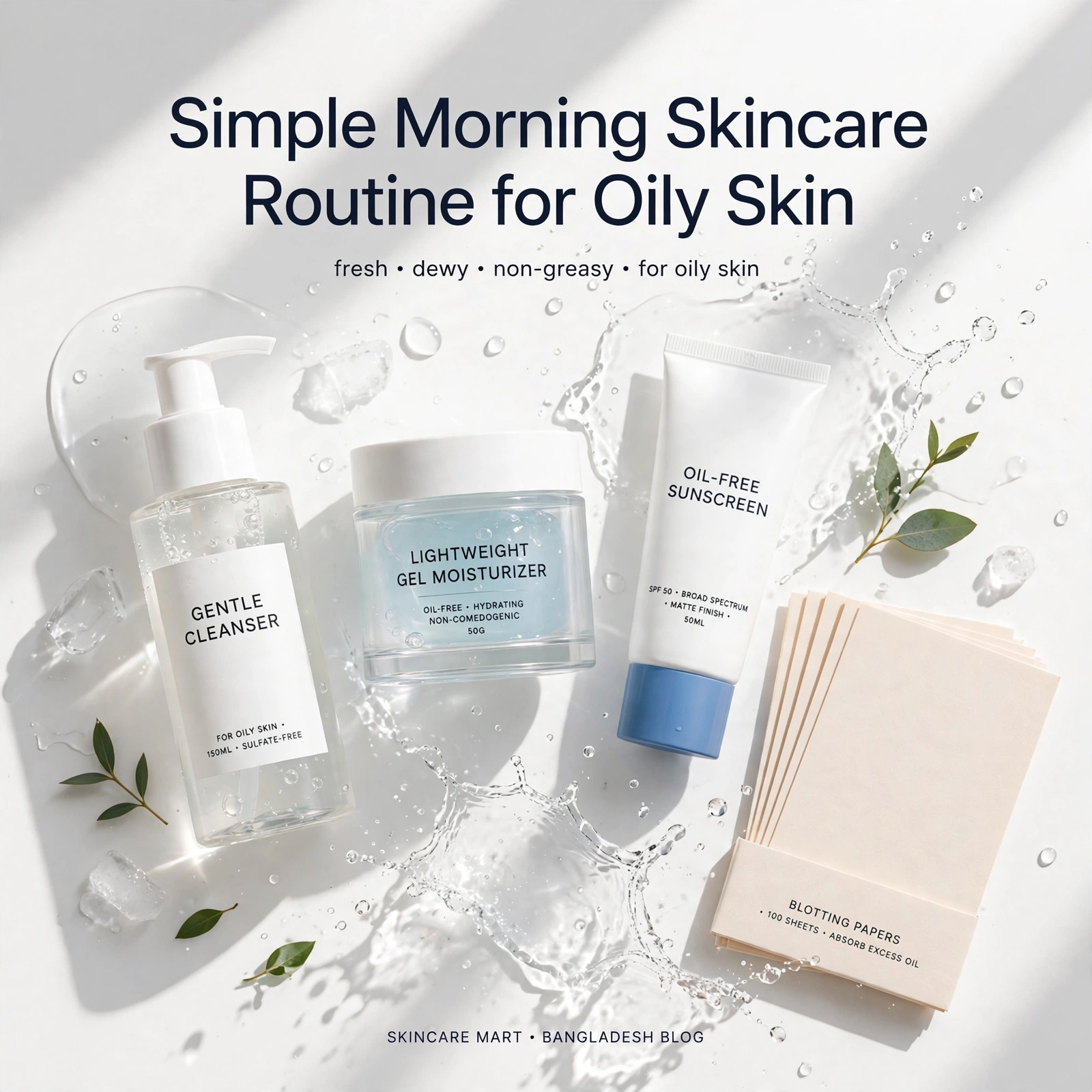
- Cleanse: A gentle, low-foam or gel cleanser, or in humid weather just a splash-rinse if your skin doesn't feel oily overnight.
- Hydrating toner or essence (optional): A thin, water-based toner with something soothing like centella asiatica — skip this step entirely if your skin already feels comfortable; it isn't mandatory.
- Moisturizer: A lightweight, gel or lotion-based, oil-free formula. Even oily skin needs this step; skipping it often makes oiliness worse as skin overcompensates.
- Sunscreen: A broad-spectrum SPF 30 or higher, applied as the last step before you leave the house.
Night
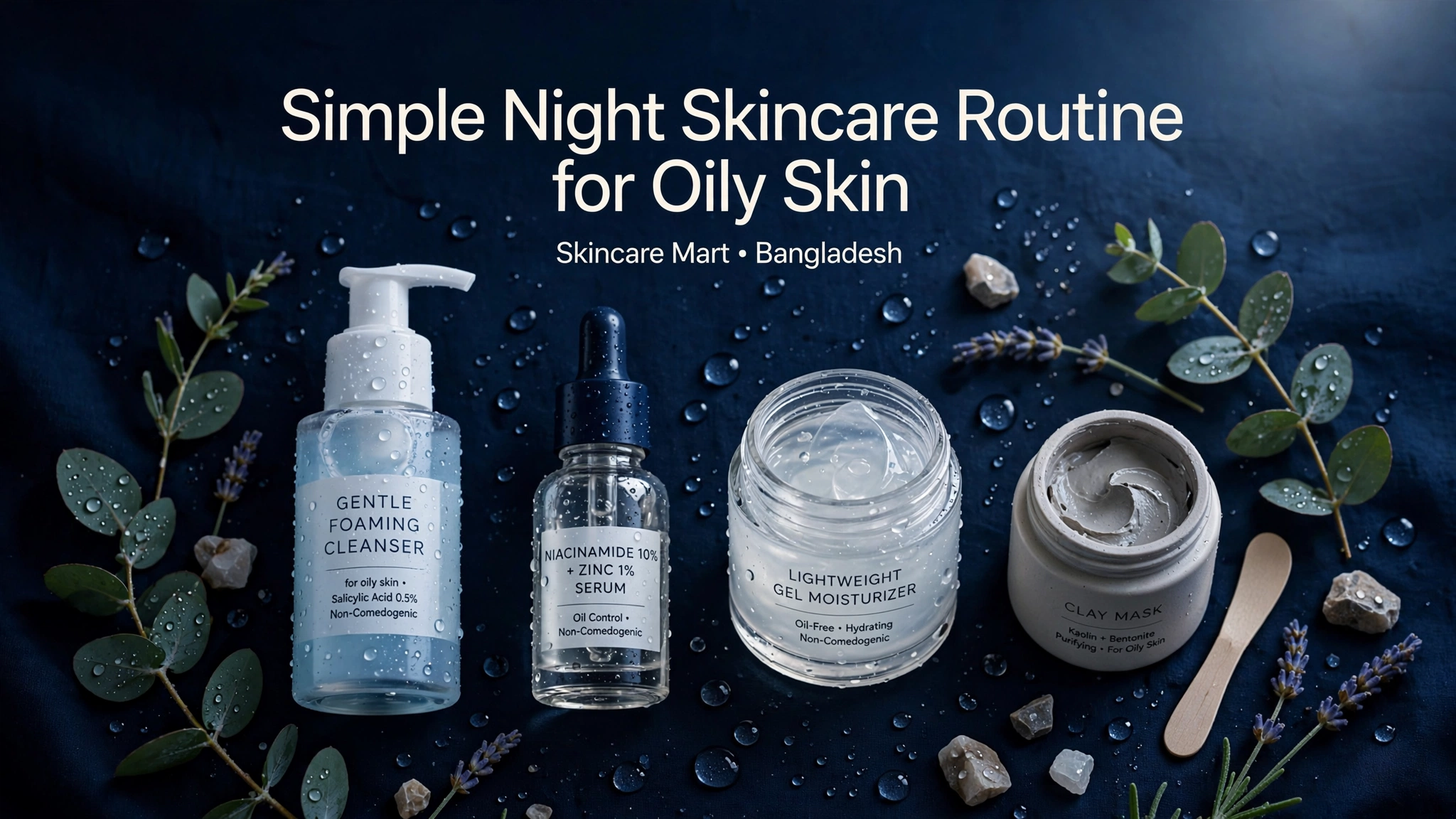
- Cleanse: Remove sunscreen and the day's sweat and dirt with your gentle cleanser. If you wore heavy sunscreen or makeup, a first cleanse with a micellar water or gentle oil cleanser followed by your regular cleanser can help, but it's optional, not mandatory, for most beginners.
- Treatment (optional, add later): Once your skin tolerates the basics, a targeted serum — niacinamide for oil control, for example — can go here.
- Moisturizer: The same lightweight moisturizer, or a slightly richer one if your skin feels tight after cleansing.
That's the entire routine. Toner, essence, and serum are genuinely optional add-ons in Korean skincare guidance for beginners — the idea that you need all of them from day one is a marketing habit, not a dermatological requirement.
Bangladesh climate context: what actually changes
Three things about local conditions should shape how you shop and how you use these products:
- Humidity most of the year: Skin here rarely needs the same moisture-locking heaviness that Korean winter routines are built for. Gel and lotion textures usually feel more comfortable year-round than thick creams.
- Monsoon-specific risks: A Dhaka-based dermatologist writing for a national newspaper has noted that monsoon humidity increases sebaceous gland activity, making oily skin oilier and leaving dry skin patchy, and that damp skin — especially on the feet — becomes more prone to fungal infections. Keeping your face genuinely clean, letting wet skin (including feet) dry out, and not over-washing with harsh soap are the practical takeaways.
- Year-round sun exposure: Bangladesh doesn't have a "low sun" season the way temperate countries do. Dermatology guidance calls for a broad-spectrum SPF 30+ sunscreen daily, applied about 15 minutes before going outdoors and reapplied roughly every two hours when you're actually outside, or after heavy sweating — which matters more here than in cooler climates, since sweat alone can wear through a morning application well before noon.
Choosing your first products: a simple checklist
| Step | Look for | Avoid for now |
|---|---|---|
| Cleanser | Gel or low-foam, fragrance-light, labeled gentle or for sensitive/combination skin | Strong foaming or alcohol-based cleansers that leave skin feeling tight |
| Toner/essence | Water-based, centella asiatica, niacinamide, or hyaluronic acid; thin consistency | Exfoliating (acid) toners as a first product |
| Moisturizer | Gel or lotion, "oil-free" or "non-comedogenic" on the label | Heavy night creams or balms as your only moisturizer |
| Sunscreen | Broad-spectrum, SPF 30+, labeled non-greasy or matte-finish | Sunscreen-in-moisturizer as your only sun protection if you're outdoors for hours — it's convenient, but reapplication is still necessary |
How to introduce new products without overwhelming your skin
Add one new product at a time, and give it one to two weeks before judging it — this is standard advice across both Korean skincare guides and general dermatology sources, and it exists so that if your skin reacts, you know exactly which product caused it. Before using any new leave-on product for the first time, patch-test it on a small area of skin (like behind the ear or inner forearm) for 24 to 48 hours. Apply products from thinnest to thickest texture: toner before serum, serum before moisturizer, moisturizer before sunscreen.
Common mistakes to avoid
- Copying a 10-step routine on day one. More products layered at once makes it harder to tell what's working and raises the chance of irritation or clogged pores in humid weather.
- Skipping sunscreen because it's cloudy or you're "indoors most of the day." UV exposure still occurs on overcast days and through most windows.
- Over-cleansing because skin feels sticky. Sweat, not necessarily excess oil, is often the cause of that stickiness in humid weather; washing too often or with harsh cleansers can strip the skin and trigger more oil production, not less.
- Using rich, Korean-winter-formulated creams year-round. A texture built for dry, cold air can feel heavy and pore-clogging in Dhaka's climate for most of the year.
- Ignoring damp areas like the feet during monsoon. Prolonged dampness there is a known trigger for fungal skin issues locally; drying off thoroughly after rain exposure matters as much as your facial routine.
Frequently asked questions
Do I really need a toner or essence to do "proper" Korean skincare?
No. Toner and essence are optional hydration steps in most beginner-level Korean skincare guidance. They can add comfort, but a routine of cleanser, moisturizer, and sunscreen is a complete, dermatologically reasonable routine on its own.
My skin feels oily in Bangladesh's heat — should I skip moisturizer?
Skipping moisturizer on oily skin is one of the most common beginner mistakes; it often pushes skin to produce more oil to compensate. Choose a lightweight, oil-free, gel-based moisturizer instead of dropping the step entirely.
How often should I reapply sunscreen during the day?
Dermatology guidance recommends reapplying broad-spectrum sunscreen approximately every two hours when you're outdoors, and immediately after heavy sweating — which is worth planning around in Bangladesh's heat and humidity, since sweat can shorten how long a single application actually protects you.
Is it safe to use Korean skincare products while pregnant or breastfeeding?
Some skincare ingredients need caution during pregnancy or breastfeeding, and this varies by ingredient and formulation. Rather than assuming any product is safe, check the specific ingredient list with a qualified clinician before starting something new during this time.
What should I do differently during monsoon season specifically?
Keep your routine simple and consistent, dry damp skin (especially feet) thoroughly after rain exposure, avoid harsh soap that strips the skin barrier, and don't skip sunscreen just because it's raining or overcast — humidity and dampness are more of a monsoon skin risk here than lack of sun.
When can I start adding actives like niacinamide or retinol?
Once your basic four-step routine has been comfortable for a few weeks, you can introduce one targeted treatment at a time, patch-testing first and watching for irritation before adding anything else.
Getting started
A Korean skincare routine doesn't need to be complicated to work in Bangladesh's climate — it needs to be matched to it. Start with a gentle cleanser, a lightweight moisturizer, and daily sunscreen, add a hydrating toner or essence only if it genuinely helps, and introduce anything further one product at a time. Browse Skincare Mart's cleanser, moisturizer, and sunscreen categories to build this routine at your own pace, and check individual product pages for full ingredient lists and current stock before you buy.