Tight, flaky skin at night isn't always the same problem twice. Sometimes it's genuinely dry skin asking for more oil; sometimes it's dehydrated skin — even oily-looking skin — asking for more water. Using the wrong routine for the wrong problem is a common reason a "good" moisturizer doesn't seem to work.
Quick answer: A night routine for dry or dehydrated skin has three core steps: a gentle, non-foaming cleanser; a hydrating, water-based serum (hyaluronic acid is the most studied option) if your skin lacks water; and a richer, ceramide- or emollient-based moisturizer applied within a few minutes of washing to lock that moisture in. Dry skin is a skin type that lacks oil; dehydrated skin is a temporary condition that lacks water — and you can have both, or have oily, dehydrated skin, at the same time.
Who this guide is for
This is a general starting routine for people whose skin feels tight, rough, dull, or flaky at night. It isn't a treatment plan for diagnosed eczema, psoriasis, or other skin conditions that cause dryness — those need a dermatologist's care, and this article doesn't claim any product cures or permanently reverses dry or dehydrated skin. If dryness is severe, cracking, bleeding, or not improving with basic care, see a qualified clinician rather than relying on skincare alone.
Dry skin vs. dehydrated skin: why the distinction matters
Dry skin is generally described as a skin type — it doesn't produce enough natural oils, tends to look matte, and is a fairly consistent, long-term trait. Dehydrated skin is usually described as a temporary condition caused by a lack of water in the skin, and it can affect any skin type, including oily skin — which is why some people have breakouts and tightness at the same time. Common signs pointing toward dehydration rather than dryness include skin that looks dull despite regular moisturizer use, or a T-zone that still produces oil while the rest of the face feels tight. Because the two respond to different ingredients — oil-replenishing for dry skin, water-replenishing for dehydration — figuring out which (or both) you're dealing with changes what your routine should prioritize.
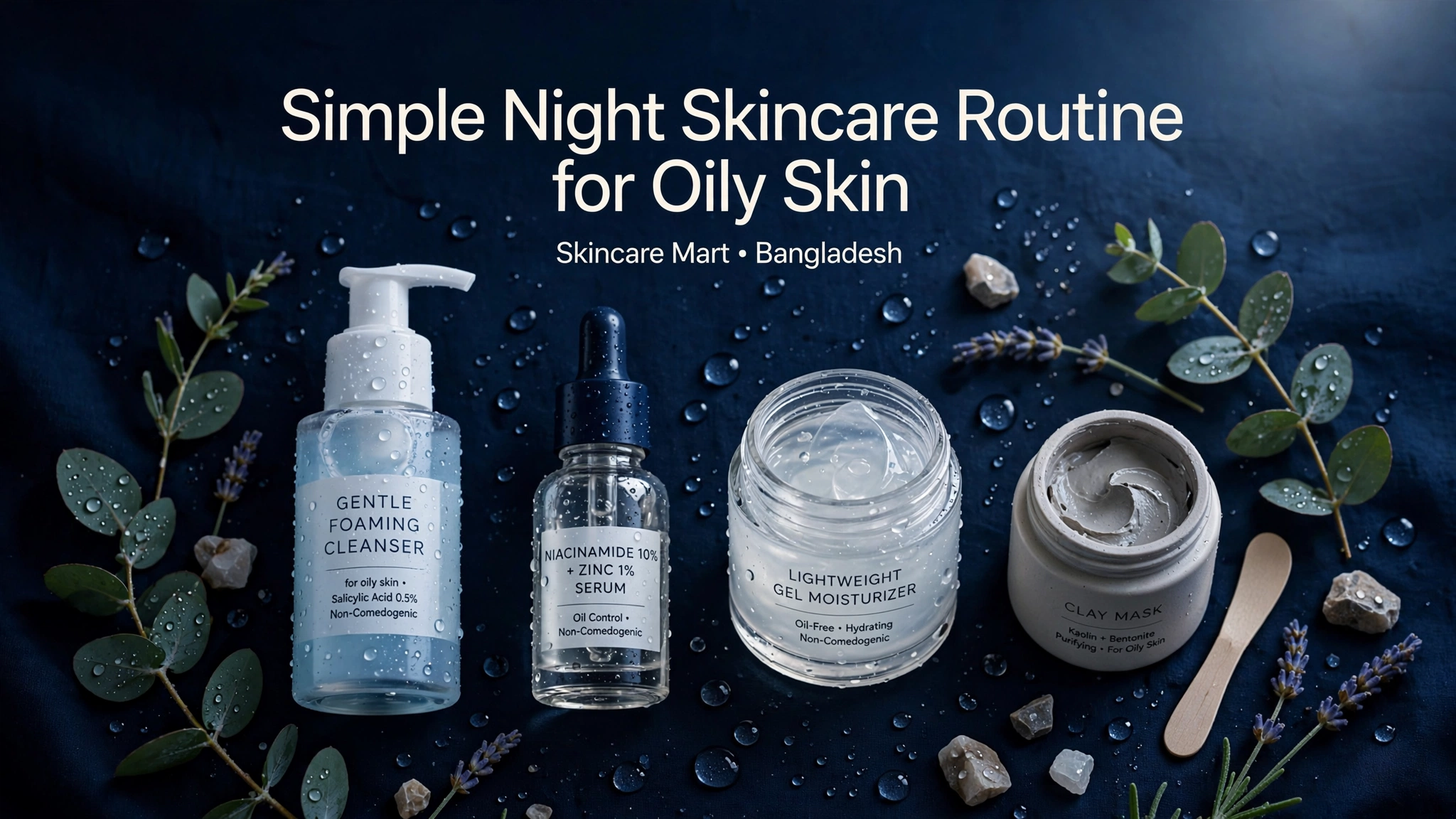
The night routine
- Cleanse gently: Use a soap-free, fragrance-free cleanser, and only enough to remove dirt, oil, and sunscreen — dermatology guidance specifically warns against using enough to build a thick lather, since that level of cleansing removes more of the skin's natural oil than necessary.
- Hydrate (for dehydration): If your skin lacks water rather than oil, apply a lightweight, water-based serum — hyaluronic acid is the most commonly recommended humectant ingredient for this step — to damp skin before moisturizer.
- Moisturize to seal: Apply a richer cream or ointment-style moisturizer, ideally within a few minutes of cleansing while skin is still slightly damp, since moisturizers work partly by trapping existing moisture in the skin. Look for ceramides, glycerin, shea butter, or hyaluronic acid on the ingredient list.
If your skin is dry rather than dehydrated, you can skip the separate hydrating serum and go straight from cleanser to a richer moisturizer — the priority is replacing lost oil, not adding water. If you have both dryness and dehydration, layering a hydrating serum under a richer cream addresses both at once.
Bangladesh climate context
Dry and dehydrated skin complaints in Bangladesh tend to cluster around the cooler, drier winter months (roughly December to February), when indoor heating or fans and lower humidity outdoors both pull moisture from the skin faster than in the hot, humid rest of the year. A hospital-based dermatology study in Bangladesh recorded winter as the second-highest season for skin disease cases after monsoon, which lines up with dryness and irritation becoming more noticeable once humidity drops. If your skin only feels tight and flaky during winter and is comfortable the rest of the year, that pattern points more toward seasonal dehydration than a year-round dry skin type — worth keeping in mind when deciding whether to keep a rich moisturizer in rotation all year or mainly during the cooler months.
Product-selection checklist
| Step | Look for | Avoid |
|---|---|---|
| Cleanser | Soap-free, fragrance-free, cream or lotion-based | Foaming or high-lather cleansers, alcohol-based toners |
| Hydrating serum (dehydration) | Hyaluronic acid, glycerin, other humectants | Using a hydrating serum alone with no moisturizer on top — humectants can pull moisture from deeper skin layers if not sealed in |
| Moisturizer | Ceramides, shea butter, glycerin; cream or ointment texture over thin lotion for very dry skin | Products with added fragrance or alcohol if skin is easily irritated |
How to apply this routine correctly
Keep any evening shower or face-wash short — dermatologists generally suggest five to ten minutes with warm, not hot, water, since hot water and long washing strip natural oils and can worsen dryness. Pat skin dry rather than rubbing, and apply your hydrating serum and moisturizer within a few minutes, while skin is still slightly damp, to help lock in moisture. If you're introducing a new serum or active ingredient, patch-test it on a small area for 24 to 48 hours first, and add one new product at a time so you can tell what's helping.
Mistakes and cautions
- Treating all "dry-feeling" skin the same way. A rich, oil-heavy cream may not fix dehydration, and a lightweight water-based serum alone won't fix true oil-deficient dry skin.
- Skipping moisturizer after a hydrating serum. Humectant ingredients like hyaluronic acid draw in moisture but need a moisturizer on top to seal it in, especially in low-humidity conditions.
- Long, hot showers before bed. These feel relaxing but strip the skin's oil barrier and can make dryness worse overnight.
- Waiting too long to moisturize after washing. Moisturizer is most effective when applied to still-damp skin within a few minutes of cleansing.
- Adding fragranced or active-heavy products to already irritated, dry skin. This can increase stinging, redness, or flaking rather than resolve it.
Frequently asked questions
How do I know if my skin is dry or dehydrated?
Dry skin tends to be a consistent, year-round trait with small pores and a matte look that rarely produces oil. Dehydrated skin can affect any skin type, including oily skin, and often shows up as tightness or dullness that improves quickly when you use a hydrating, water-based product. You can have both at once.
Can oily skin be dehydrated too?
Yes. Dehydration is about water, not oil, so oily skin can still lack water and feel tight or look dull even while producing visible shine, particularly in the T-zone.
Should I apply moisturizer to wet or dry skin?
Damp skin. Dermatology guidance recommends applying moisturizer within a few minutes of washing, while skin is still slightly damp, since this helps trap existing moisture rather than letting it evaporate first.
Is a cream or a lotion better for dry skin?
Creams and ointments are generally recommended over thinner lotions for very dry skin, since they tend to be more occlusive and less likely to cause irritation from added preservatives common in lighter formulas.
Will drinking more water fix dehydrated skin?
Overall hydration supports general health, but topical, water-based skincare ingredients like hyaluronic acid have a more direct and immediate effect on skin's surface hydration than water intake alone. Think of the two as complementary, not interchangeable.
How long should my evening shower or face-wash be if I have dry skin?
Dermatologists generally recommend keeping showers or baths to five to ten minutes in warm, not hot, water, since longer or hotter washing strips the skin's natural oil barrier and can worsen dryness.
Getting started
Dry and dehydrated skin respond to different fixes, so the first step is figuring out which one (or both) you're dealing with before you shop. A gentle cleanser, a hydrating serum where water loss is the issue, and a ceramide-rich moisturizer applied to damp skin cover the essentials for most people. Browse Skincare Mart's cleanser and moisturizer categories for hydrating and barrier-repair options, and check each product's ingredient list on its page before adding something new to your night routine.