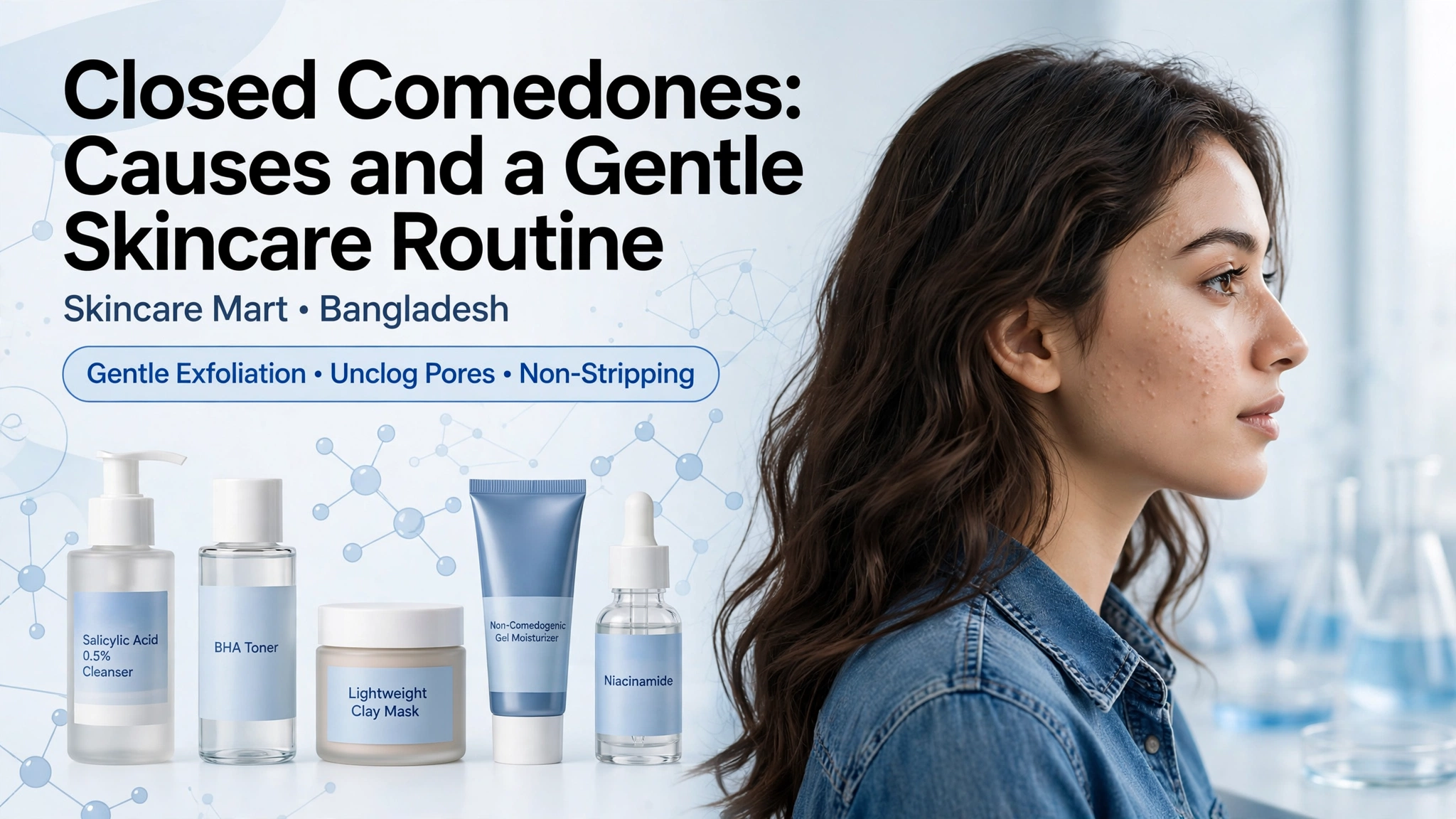
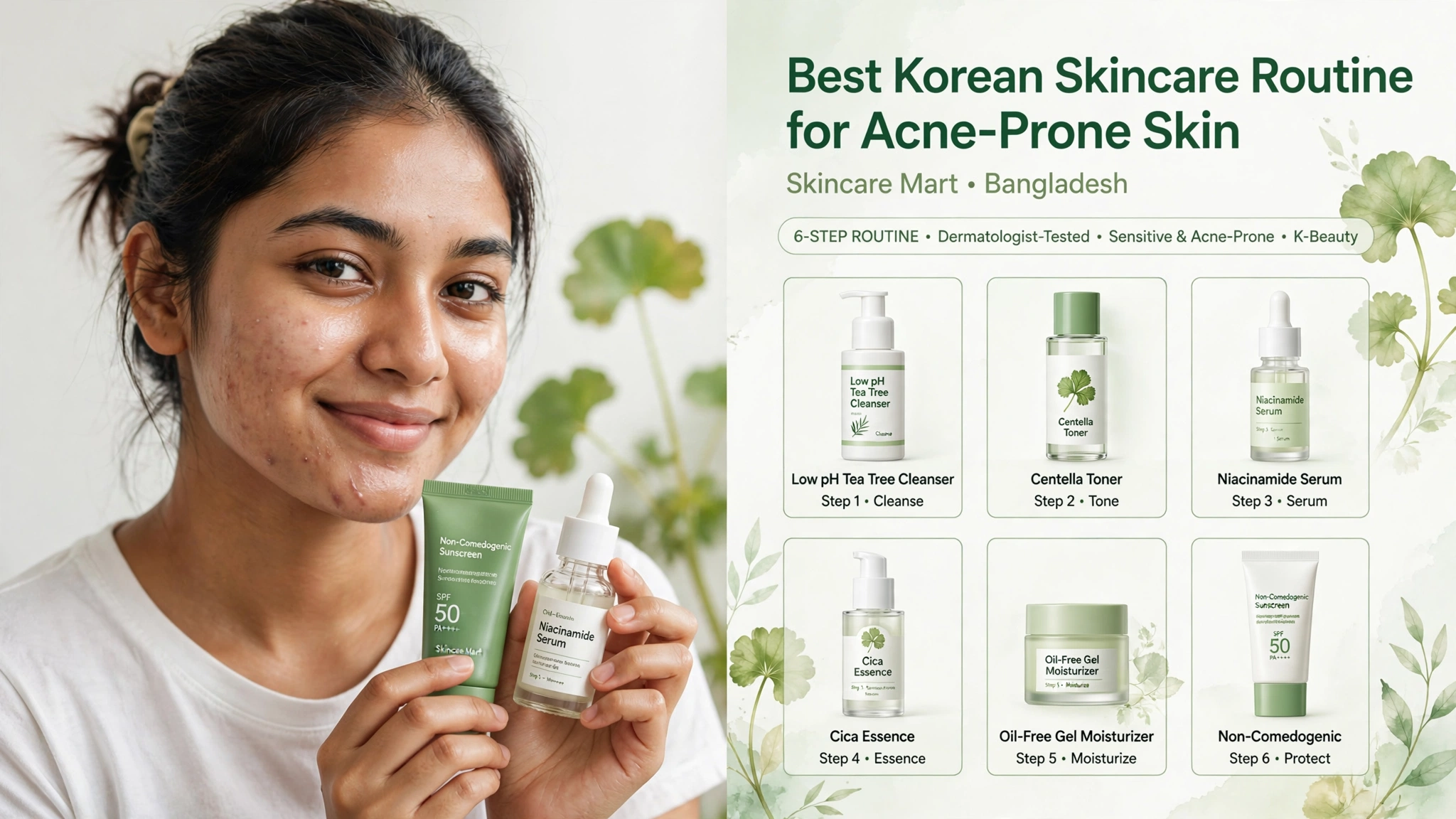
Acne-prone skin doesn't need more products — it needs the right handful, used consistently and without over-treating. A common pattern with acne is reaching for stronger cleansers, more frequent scrubs, and multiple active ingredients at once, which dermatologists warn can damage the skin barrier and make breakouts worse rather than better.
Quick answer: A Korean-inspired routine for acne-prone skin works best kept simple: a gentle, non-comedogenic cleanser twice daily, an oil-free moisturizer (never skipped), daily broad-spectrum SPF 30+ sunscreen, and one targeted treatment ingredient — salicylic acid for blackheads and whiteheads, or benzoyl peroxide for inflamed, red pimples — introduced gradually rather than all at once. Acne is not caused by dirty skin, so over-washing or scrubbing tends to backfire rather than help.
Who this guide is for
This is a general routine for occasional breakouts and mild-to-moderate acne. It is not a treatment plan for cystic, severe, or scarring acne, or for acne that hasn't responded to consistent over-the-counter care after a few months — a dermatologist can prescribe stronger treatments (like prescription-strength retinoids or antibiotics) that this article doesn't cover. This routine also isn't a claim that any skincare product cures acne; over-the-counter ingredients manage breakouts, and severe or persistent acne needs a clinician's evaluation to avoid scarring.
Why gentle matters more than strong for acne-prone skin
Dermatologists specifically note that acne is not a result of "dirty" skin, and that over-washing can damage the skin's protective barrier and aggravate breakouts rather than clear them. The same caution applies to exfoliation: scrubs and harsh physical exfoliants tend to inflame acne-prone skin and worsen it. The goal of a routine here is to treat the whole acne-prone area consistently — preventing new breakouts before they form — rather than aggressively attacking existing spots one at a time.
The routine
Morning
- Cleanse: A gentle, non-comedogenic cleanser. If breakouts are frequent, a cleanser containing a low concentration of salicylic acid or benzoyl peroxide can help, provided skin tolerates it without excess dryness or irritation.
- Treat (optional): A light, targeted product — niacinamide or a low-strength salicylic acid serum — to help with oil and redness without overwhelming the skin.
- Moisturize: An oil-free, non-comedogenic moisturizer. Skipping this step is a common mistake — dehydrated skin can produce more oil, which tends to worsen breakouts rather than reduce them.
- Sunscreen: Broad-spectrum SPF 30 or higher, in an oil-free, gel, or lightweight lotion formula labeled non-comedogenic or "won't clog pores."
Night
- Cleanse: Remove sunscreen, oil, and the day's buildup with the same gentle cleanser.
- Treat: This is where a stronger active ingredient, if used, typically goes — for example, a dermatologist-recommended retinoid like adapalene, or benzoyl peroxide, applied as a thin layer across the whole acne-prone area rather than spot-by-spot.
- Moisturize: A lightweight, oil-free moisturizer to support the skin barrier overnight, especially important if you're using a drying active ingredient.
Understanding the main acne-fighting ingredients
Not every acne ingredient works the same way, and using several at once is one of the fastest routes to irritation:
- Salicylic acid: A beta-hydroxy acid that exfoliates inside pores; works best on non-inflammatory acne like blackheads and whiteheads.
- Benzoyl peroxide: Targets acne-causing bacteria and inflammation; especially effective on mild inflamed pimples. Products range up to 10% strength, but dermatology guidance suggests starting around 2.5% to reduce dryness and irritation.
- Adapalene (a retinoid): Helps clear blackheads, whiteheads, and pimples over time; available over-the-counter at low strength in some markets.
- Azelaic acid: Helps with acne and can also fade the dark marks left behind after a spot clears.
Dermatology guidance recommends starting with one new active ingredient at a time and not adding another during the initial trial period — layering several at once makes it hard to know what's helping and raises the risk of irritation.
Bangladesh climate context
Heat and humidity increase sebaceous gland activity for much of the year in Bangladesh, and a Dhaka-based dermatologist has specifically noted that monsoon humidity makes oily and acne-prone skin oilier and more breakout-prone. That makes two things more important locally than they might be in a drier climate: choosing genuinely oil-free, non-comedogenic textures for both moisturizer and sunscreen, and resisting the instinct to wash more often when skin feels oily or sticky, since over-washing is more likely to aggravate acne than resolve it.
Product-selection checklist
| Step | Look for | Avoid |
|---|---|---|
| Cleanser | Gentle, non-comedogenic; salicylic acid or low-strength benzoyl peroxide if tolerated | Harsh scrubs, physical exfoliating beads, alcohol-based washes |
| Treatment | One active at a time — salicylic acid, benzoyl peroxide, adapalene, or azelaic acid | Multiple strong actives layered together as a beginner |
| Moisturizer | Oil-free, non-comedogenic, labeled for acne-prone or oily skin | Heavy, occlusive creams that feel greasy on application |
| Sunscreen | Broad-spectrum SPF 30+, oil-free, gel or matte-finish | Fragranced or heavily oil-based sunscreens |
How to introduce actives without irritating your skin
Start any new active ingredient two to three times a week rather than daily, and watch for excess dryness, peeling, or burning before increasing frequency. Apply acne medication as a thin layer across the whole affected area, not just visible spots — treating only existing pimples addresses what's there but does nothing to prevent the next breakout. Patch-test new leave-on products for 24 to 48 hours first, and always apply an oil-free moisturizer after a drying active to protect the skin barrier.
Mistakes and cautions
- Over-washing or scrubbing. This is one of the most consistently flagged mistakes in dermatology guidance for acne — it damages the skin barrier and tends to worsen breakouts.
- Skipping moisturizer because skin is oily or breaking out. Dehydrated skin can produce more oil, which often leads to more breakouts, not fewer.
- Layering multiple strong actives at once. Salicylic acid, benzoyl peroxide, and a retinoid used together, especially as a beginner, significantly raises the risk of irritation.
- Spot-treating only visible pimples. Treating the whole acne-prone area is what actually prevents new breakouts from forming.
- Assuming acne means the skin is dirty. This mindset often leads to harsher cleansing than the skin can tolerate.
Frequently asked questions
Should I use salicylic acid or benzoyl peroxide for my acne?
Salicylic acid tends to work best on non-inflammatory acne like blackheads and whiteheads, while benzoyl peroxide is generally more effective on inflamed, red pimples. Some people use both at different times, but not layered together at full strength when starting out.
Can I skip moisturizer if my skin is oily and acne-prone?
No — skipping moisturizer is a common mistake for acne-prone skin specifically, since dehydrated skin can increase oil production and worsen breakouts. An oil-free, non-comedogenic moisturizer is still a required step.
Is sunscreen necessary if I'm using acne treatments?
Yes, and it becomes more important with certain treatments — retinoids like adapalene can increase sun sensitivity. The AAD recommends broad-spectrum SPF 30 or higher daily, in an oil-free, non-comedogenic formula.
How long before I see results from an acne ingredient?
Most over-the-counter acne ingredients need consistent use over several weeks before visible improvement, and dermatology guidance specifically advises not adding another product or stopping the one you started with during that trial period.
Is Korean skincare safe to use alongside acne treatment ingredients?
Many Korean skincare products (gentle cleansers, centella-based soothing serums, lightweight moisturizers) pair well with acne treatment ingredients, but adding several actives from different products at once — a Korean serum plus a strong acne treatment — raises irritation risk. Introduce one at a time.
When should I see a dermatologist instead of managing acne with skincare alone?
If acne is severe, painful, cystic, leaving scars, or not improving after a few months of consistent over-the-counter care, it's time to see a dermatologist rather than continuing to self-treat — prescription options exist that aren't available over the counter.
Getting started
Acne-prone skin generally responds better to a simple, consistent routine than a crowded one: gentle cleansing, one well-chosen active ingredient, an oil-free moisturizer, and daily sunscreen. Browse Skincare Mart's cleanser, moisturizer, and sunscreen categories for non-comedogenic options suited to acne-prone skin, and check each product's ingredient list on its page before adding a new active to your routine.