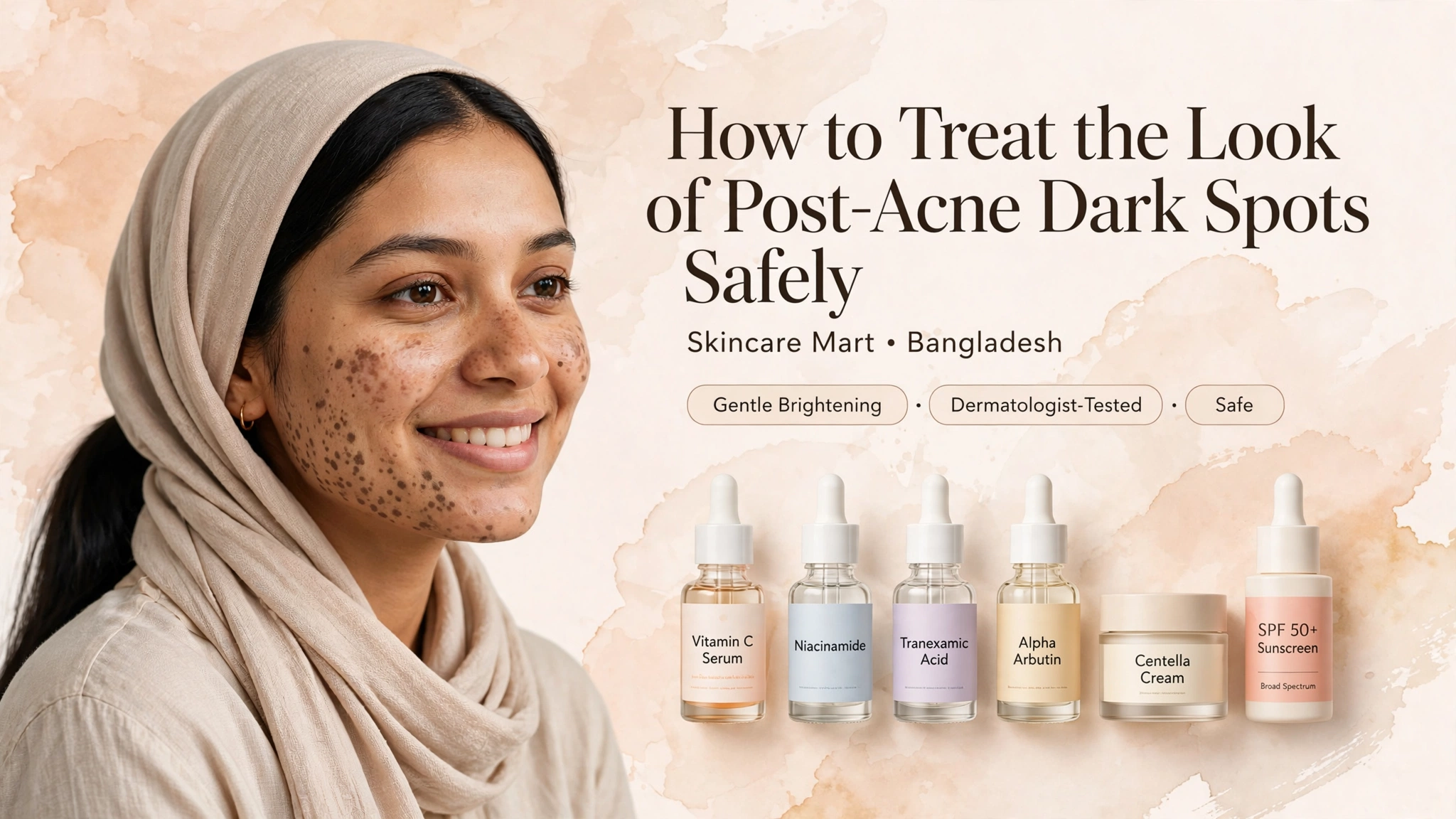
The pimple is gone, but the mark it left behind is still staring back at you weeks later. That flat brown, red, or dark patch isn't a scar in the textured sense — it's post-inflammatory hyperpigmentation (PIH), and while it's stubborn, it's also one of the more predictably manageable skin concerns when approached with the right ingredients and a lot of patience.
Quick answer: The safest way to fade the look of post-acne dark spots is daily broad-spectrum SPF 30+ sunscreen (the single most important step), combined with a proven brightening ingredient — niacinamide, azelaic acid, vitamin C, or a retinoid — used consistently for at least 8 to 12 weeks, since deeper or longer-standing spots can take 6 to 12 months to visibly fade. Picking at healing acne and skipping sunscreen are the two most common reasons dark spots stick around longer than they should.
Who this guide is for
This is for people dealing with flat, discolored marks left behind after acne has healed — not raised or pitted scars, which need different treatment, and not ongoing active breakouts, which this guide's companion piece on acne-prone skin covers. This isn't a claim that any product removes, cures, or permanently erases dark spots — PIH fades gradually with consistent care, and results vary by skin tone, depth of pigment, and how the spot originally formed. If dark spots are widespread, appearing without a clear cause, or not improving after several months of consistent care, or if you're pregnant, breastfeeding, or have sensitive or reactive skin, a dermatologist can rule out other causes (like melasma, which needs different treatment) and recommend options this article doesn't cover, including prescription-strength ingredients.
What's actually happening with post-acne dark spots
PIH occurs when skin produces extra melanin in response to the inflammation caused by a breakout, leaving a flat mark after the pimple itself has healed. It's different from acne scarring, which involves a change in skin texture rather than just color, and different from melasma, which is a separate pigmentation pattern usually linked to hormones or sun exposure. PIH is also generally more pronounced and slower to fade in deeper skin tones, where pigment can settle further into the skin.
The two things that matter most
1. Sunscreen, every day, without exception
Sun exposure is one of the biggest drivers of how dark and how long-lasting a post-acne mark becomes — UV exposure darkens existing pigment and can delay fading significantly. Daily broad-spectrum sunscreen with an SPF of 30 or higher is consistently described as the essential first step in any hyperpigmentation approach, more important than any single brightening ingredient. Skipping sunscreen while using brightening actives works against the very result you're trying to achieve.
2. A proven brightening ingredient, used consistently
A handful of ingredients have real evidence behind them for fading the look of post-acne marks:
- Niacinamide: A form of vitamin B3 shown to help reduce the appearance of hyperpigmentation while also supporting skin barrier function — generally well-tolerated, making it a reasonable starting point.
- Azelaic acid: Works by slowing melanin production and is considered less irritating than some alternatives; it also has anti-inflammatory properties, which is useful since acne-prone skin is dealing with both active breakouts and their aftermath.
- Vitamin C (L-ascorbic acid): Works by inhibiting an enzyme involved in melanin production and offers antioxidant support; typically used in the morning under sunscreen, though formulation and stability affect how well it performs.
- Retinoids: Increase cell turnover, which can help fade discoloration over time, but increase sun sensitivity, making daily sunscreen even more essential alongside them.
Hydroquinone is another ingredient with strong evidence for fading dark spots, but it's typically used under a dermatologist's supervision for short, defined courses rather than as an everyday over-the-counter product — worth discussing with a clinician rather than self-prescribing, particularly for long-term or unsupervised use.
Bangladesh climate context
Bangladesh's high year-round sun exposure makes the sunscreen step even more critical than it might be in a lower-UV climate — a dark spot that would fade in a few months in a shaded, temperate environment can persist much longer with daily unprotected sun exposure. Reapplying sunscreen through the day matters here specifically because heat and humidity accelerate sweating, which shortens how long a morning application actually protects the skin. During monsoon season, when a Dhaka dermatologist has noted increased sebaceous activity and breakouts, staying consistent with both acne care and sun protection at the same time helps prevent new marks from forming while older ones fade.
A safe routine for fading post-acne marks
| Step | Morning | Night |
|---|---|---|
| Cleanse | Gentle, non-comedogenic cleanser | Same gentle cleanser |
| Treat | Vitamin C serum (optional) | Niacinamide, azelaic acid, or a retinoid — pick one to start |
| Moisturize | Oil-free, non-comedogenic moisturizer | Lightweight moisturizer, especially important if using a retinoid |
| Protect | Broad-spectrum SPF 30+, non-negotiable | — |
How to introduce these ingredients without irritation
Start with one brightening ingredient, used two to three times a week, before working up to daily use as your skin tolerates it. Patch-test any new product for 24 to 48 hours on a small area first. If you're using a retinoid or vitamin C alongside a physical or chemical exfoliant, introduce them on alternating days rather than together, since combining strong actives increases the risk of irritation, which can itself trigger new PIH — the opposite of the intended result. Give any routine at least 8 to 12 weeks before judging results, and expect deeper marks to take considerably longer.
Mistakes and cautions
- Skipping sunscreen while treating dark spots. This is the single most common reason marks don't fade as expected — sun exposure actively works against every brightening ingredient.
- Picking, popping, or scratching healing acne. This is one of the clearest ways to trigger new or worse PIH, regardless of what products you're using.
- Using unregulated "skin-lightening" creams. Products without clear ingredient disclosure or regulatory approval can contain harsh or unsafe ingredients; stick to well-documented actives with known safety profiles.
- Layering too many actives at once. Combining retinoid, vitamin C, and an exfoliating acid simultaneously as a beginner often causes irritation, which can create new marks rather than fade old ones.
- Expecting fast results. Most PIH takes weeks to months to visibly improve; expecting overnight change often leads to product-hopping before anything has a fair chance to work.
Frequently asked questions
How long does it take for post-acne dark spots to fade?
Most people see noticeable fading within 8 to 12 weeks of consistent care, while deeper or long-standing pigmentation can take 6 to 12 months to fully resolve.
What's the single most important step for fading dark spots?
Daily broad-spectrum sunscreen, SPF 30 or higher. It won't fade existing marks on its own, but skipping it undermines the effect of every other ingredient and can make marks darker and more persistent.
Is post-acne dark spots the same as acne scarring?
No. Post-inflammatory hyperpigmentation is a flat color change, while acne scarring involves a change in skin texture (indentation or raised tissue). They can occur together, but they generally need different treatment approaches.
Can I use vitamin C and niacinamide together?
Yes, these two are commonly used together and are generally well-tolerated as a pairing. The bigger irritation risk comes from combining stronger actives like retinoids or exfoliating acids without spacing them out.
Should I try hydroquinone for stubborn dark spots?
Hydroquinone is an effective option for some cases of hyperpigmentation, but it's typically recommended under a dermatologist's guidance for a defined period rather than continuous, unsupervised use — worth discussing with a clinician rather than choosing it on your own.
Do these ingredients have any safety reference I can check?
The American Academy of Dermatology (aad.org) publishes consumer guidance on acne and pigmentation care and is a reliable starting point for verifying claims about specific ingredients before using them.
Getting started
Fading the look of post-acne dark spots comes down to two consistent habits: daily sunscreen and one well-chosen brightening ingredient, given enough time to work. Browse Skincare Mart's sunscreen and serum categories for niacinamide, azelaic acid, and vitamin C options, and check each product's ingredient list and usage instructions on its page before adding it to your routine.