Niacinamide has become one of the few ingredients that shows up in almost every skincare recommendation — for oily skin, dry skin, sensitive skin, and everything in between. That's not just marketing: it's one of the rare actives that targets several skin concerns at once without the irritation risk that comes with many other actives, which is exactly why it fits well into skin that's already dealing with more than one issue.
Quick answer: Niacinamide (vitamin B3) supports the skin barrier, helps regulate sebum production, reduces the appearance of pores and hyperpigmentation, and calms redness and inflammation. Most well-formulated products use 2% to 10% niacinamide, with around 5% considered an effective, well-tolerated middle ground for most people — concentrations above 10% offer little extra benefit and raise the risk of temporary flushing or irritation. It pairs well with almost everything, including vitamin C and retinoids, despite an older myth suggesting otherwise.
Who this guide is for
This is for anyone deciding whether to add niacinamide to their routine, or trying to make sense of the range of concentrations and product claims on the market. Niacinamide is broadly well-tolerated, including for sensitive and reactive skin, which is part of why it's so widely recommended — but "well-tolerated" isn't the same as "risk-free" for everyone. If you have a diagnosed skin condition like rosacea or eczema, or persistent irritation with any new product, check with a dermatologist before adding actives to your routine, and always patch-test first.
What niacinamide actually does
Niacinamide is a form of vitamin B3, and its usefulness comes from doing several things reasonably well at once rather than one thing exceptionally well:
- Strengthens the skin barrier: Research has linked niacinamide to improved barrier function, which supports better hydration and can make skin more resilient to irritation from other actives, including retinoids.
- Regulates sebum production: Studies have shown niacinamide can help reduce excess oil production, which is part of why it's a common recommendation for oily and acne-prone skin.
- Reduces the appearance of pores: Often linked to its oil-regulating and barrier-supporting effects rather than a direct "pore-shrinking" mechanism.
- Fades the look of hyperpigmentation: Niacinamide works by blocking the transfer of melanin to skin cells, a different pathway than ingredients like vitamin C or hydroquinone — clinical benefit for pigmentation has been shown at concentrations as low as 2%.
- Calms redness and inflammation: Its anti-inflammatory properties make it a common recommendation for skin that's irritated, whether from acne, general sensitivity, or over-exfoliation.
- Supports the look of fine lines: Research has associated niacinamide with modest improvement in the appearance of fine lines over consistent use, generally as a supporting benefit rather than its primary use case.
None of these effects happen overnight — like most actives, niacinamide needs weeks of consistent use before changes in oiliness, pore appearance, or pigmentation become noticeable.
What concentration to look for
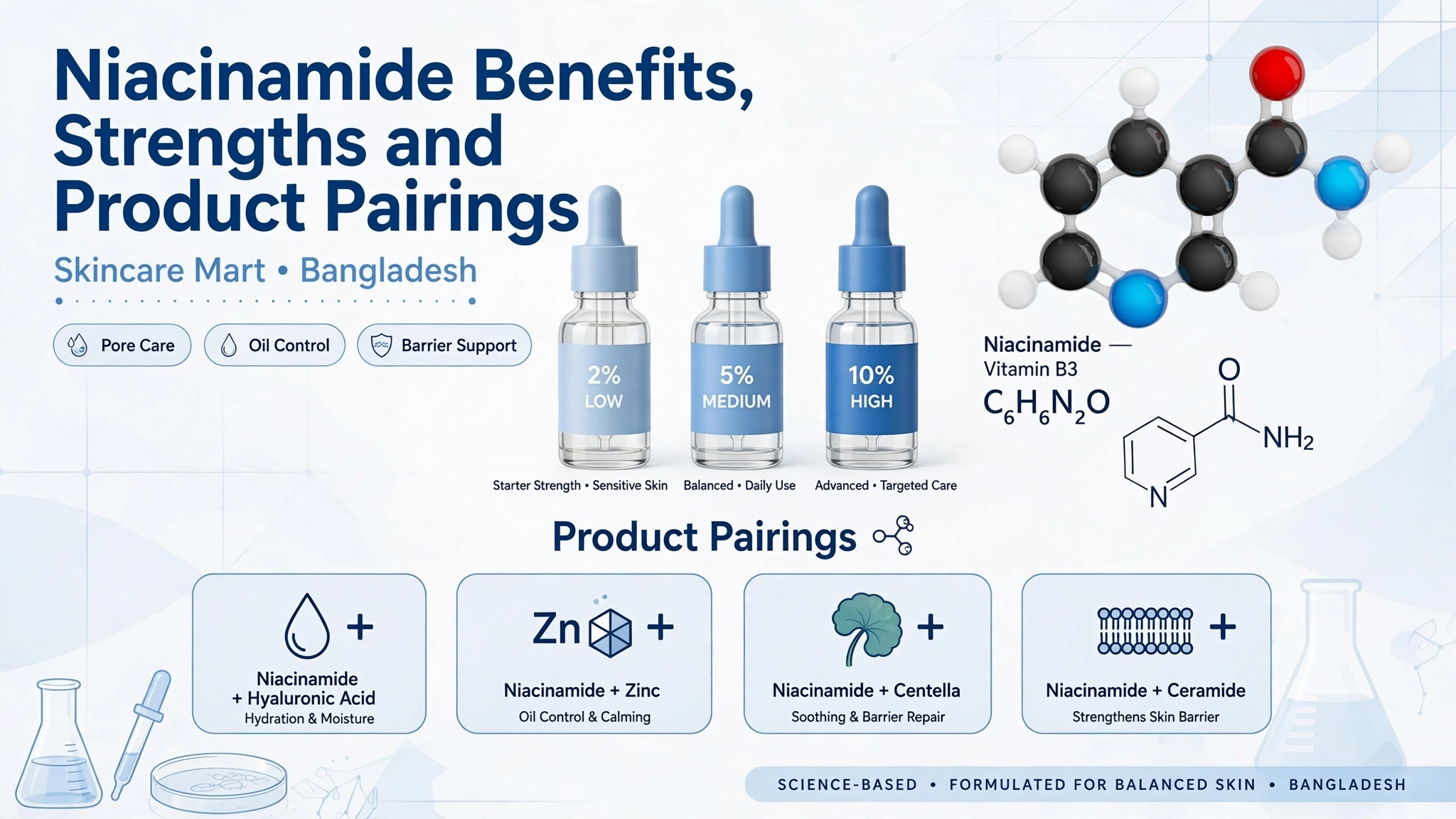
Most well-formulated niacinamide products sit in the 2% to 10% range. Within that range:
- 2–3%: A reasonable starting point for sensitive skin or first-time users, with barrier support, some anti-inflammatory benefit, and clinically shown effect on hyperpigmentation, though brightening effects at this level are milder.
- 5%: Widely cited as an effective, well-tolerated concentration that covers most of niacinamide's benefits without a meaningfully higher risk of irritation.
- 10% and above: Marketed as higher-strength options, but going above roughly 5–10% doesn't reliably produce better results and raises the chance of temporary flushing or irritation, particularly for sensitive skin.
Unlike niacin (a related but different form of vitamin B3, taken orally), topical niacinamide has not been shown to cause the flushing sometimes associated with niacin supplements — the irritation some people experience is usually concentration-related rather than the "niacin flush" reaction.
What niacinamide pairs well with
Niacinamide is one of the more flexible actives to build a routine around:
- Vitamin C: An older belief held that niacinamide and vitamin C shouldn't be combined because they'd cancel each other out or cause flushing. This has largely been set aside by more recent understanding — at the concentrations used in modern formulations, the two can generally be used together without issue, though many people still use vitamin C in the morning and niacinamide morning or night simply because that's how routines are commonly structured, not because they must be separated.
- Retinoids: This is a particularly well-regarded pairing. Niacinamide's barrier-supporting and anti-inflammatory properties can help offset some of the dryness and irritation that retinoids commonly cause, especially when introducing a retinoid for the first time.
- Hyaluronic acid: A straightforward, low-risk pairing — hyaluronic acid adds hydration while niacinamide works on oil regulation, barrier support, and tone.
- Salicylic acid and other exfoliants: Generally compatible, though as with any two actives, introducing them on alternating days when you're new to either reduces the chance of irritation.
Bangladesh climate context
Niacinamide's oil-regulating and barrier-supporting properties make it a reasonable year-round choice in Bangladesh's climate, but it's particularly useful during monsoon season, when a Dhaka dermatologist has noted that humidity drives up sebaceous gland activity and skin tends to look oilier and more prone to irritation. A lightweight, gel-based niacinamide serum tends to layer more comfortably than a heavier cream-based one under Bangladesh's heat and humidity for most of the year.
How to introduce niacinamide
Start with a 2–5% concentration, applied once daily, before increasing to twice daily if your skin tolerates it well. Apply niacinamide after cleansing and before heavier products like moisturizer or sunscreen, since it's typically formulated as a lightweight serum. Patch-test any new niacinamide product for 24 to 48 hours before applying it to your full face, and if you notice persistent flushing or irritation, that's a sign to reduce frequency or try a lower concentration rather than pushing through it.
Mistakes and cautions
- Assuming higher concentration means better results. Going above roughly 5–10% niacinamide doesn't reliably improve outcomes and increases irritation risk for many people.
- Avoiding vitamin C out of outdated caution. The "niacinamide and vitamin C don't mix" rule is largely considered outdated; the two can generally be used together in modern formulations.
- Expecting fast results for pigmentation or pores. Niacinamide's effects on these concerns build gradually with consistent use over weeks, not days.
- Skipping a patch test because niacinamide has a reputation for being "gentle." Broadly well-tolerated isn't the same as universally risk-free — some people do experience flushing or irritation, especially at higher concentrations.
Frequently asked questions
What percentage of niacinamide should I start with?
A 2% to 5% concentration is a reasonable starting point for most people, including those new to actives or with sensitive skin. You can move toward the higher end of that range once your skin shows it tolerates the ingredient well.
Can I use niacinamide and vitamin C in the same routine?
Yes. The idea that these two ingredients cancel each other out or shouldn't be combined has largely been set aside by more recent understanding of how they work at typical skincare concentrations.
Is niacinamide good for oily or acne-prone skin?
Yes — its ability to help regulate sebum production and calm inflammation makes it a commonly recommended ingredient for oily and acne-prone skin, often alongside other treatments rather than as a stand-alone acne solution.
Does niacinamide help with dark spots from acne?
Niacinamide has been shown to help fade the look of hyperpigmentation, including some post-acne marks, at concentrations as low as 2%, though results build gradually and daily sunscreen remains essential alongside any brightening ingredient.
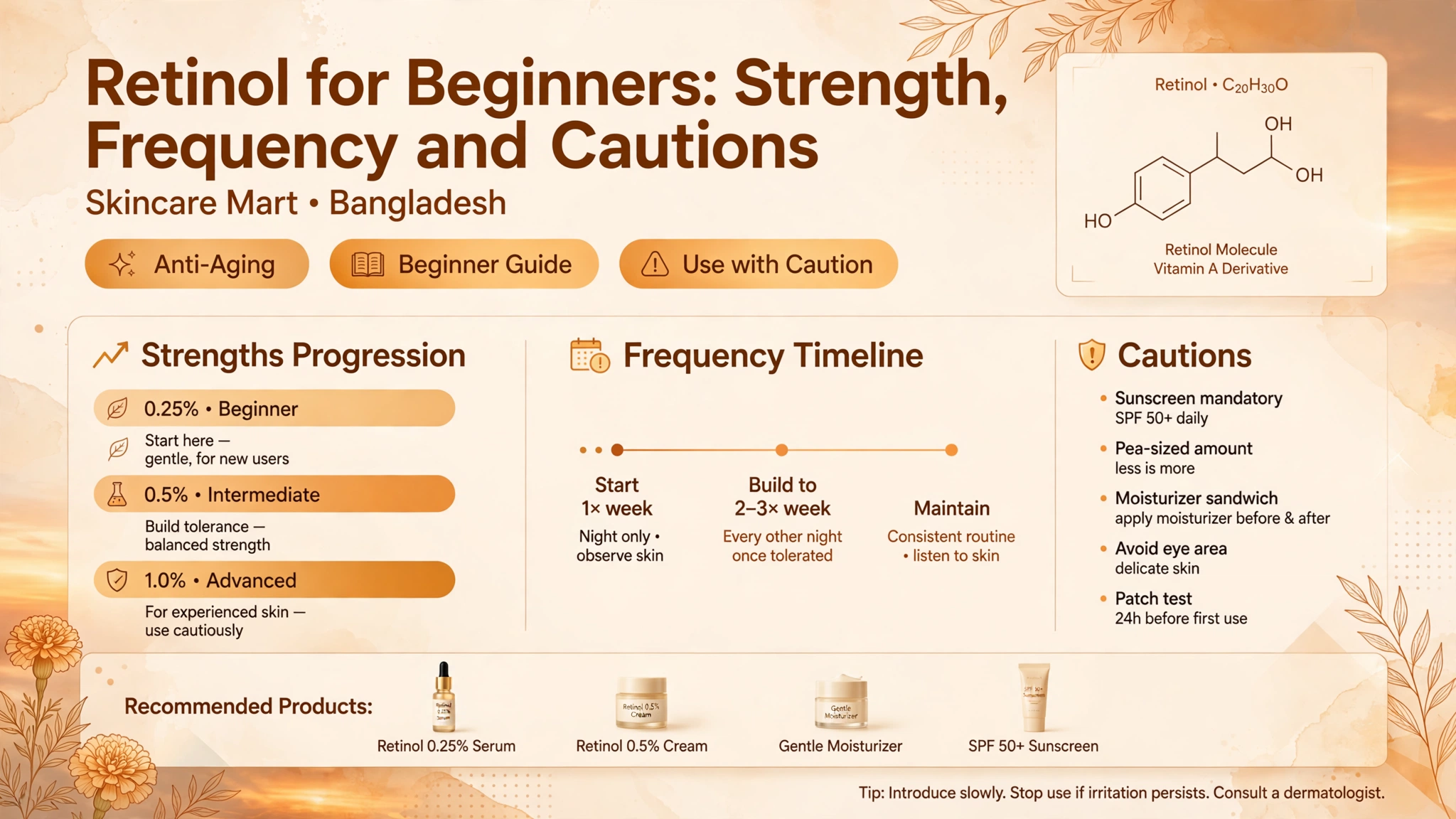
Can niacinamide be used with retinol?
Yes, and this is considered one of niacinamide's most useful pairings — its barrier-supporting properties can help offset some of the dryness and irritation that retinol commonly causes, particularly when first introducing it.
Is niacinamide safe for sensitive skin?
Niacinamide is generally considered well-tolerated by sensitive and reactive skin compared to many other actives, but "generally well-tolerated" doesn't guarantee no reaction for everyone — patch-testing and starting at a lower concentration (2–5%) is still worth doing.
Getting started
Niacinamide earns its reputation as a skincare staple by doing several jobs reasonably well — barrier support, oil regulation, tone, and calming redness — without the irritation risk of many other actives, and it plays well with almost everything else in a routine. Browse Skincare Mart's serum category for niacinamide options at different concentrations, and check each product's full ingredient list on its page before adding it alongside your current routine.