Blackheads have a way of returning to the same spots on your nose and chin no matter how often you wash your face — because washing alone can't reach what's actually causing them. Salicylic acid can, which is why it's one of the most consistently recommended ingredients for blackheads and oily skin, backed by guidance from the American Academy of Dermatology.
Quick answer: Salicylic acid is a beta-hydroxy acid (BHA) that's oil-soluble, letting it penetrate into the oily lining of a clogged pore to break down the buildup causing blackheads and whiteheads, while also reducing sebum production. The American Academy of Dermatology notes over-the-counter products typically range from 0.5% to 2% salicylic acid, applied once daily at first and increased gradually to two to three times daily as tolerated. Side effects like mild stinging, dryness, or peeling are more likely with too-frequent use than with the ingredient itself.
Who this guide is for
This is for people dealing with blackheads, whiteheads, or general oiliness looking for a well-evidenced, over-the-counter option. It isn't a treatment plan for cystic or severe acne — that needs a dermatologist's evaluation and may call for prescription-strength options. This guide isn't a claim that salicylic acid cures acne permanently; it manages clogged pores and oil while used consistently. Pregnant or breastfeeding readers should check with a clinician before using salicylic acid, since guidance on topical use during pregnancy varies and is worth a direct conversation rather than general advice.
How salicylic acid actually works on blackheads
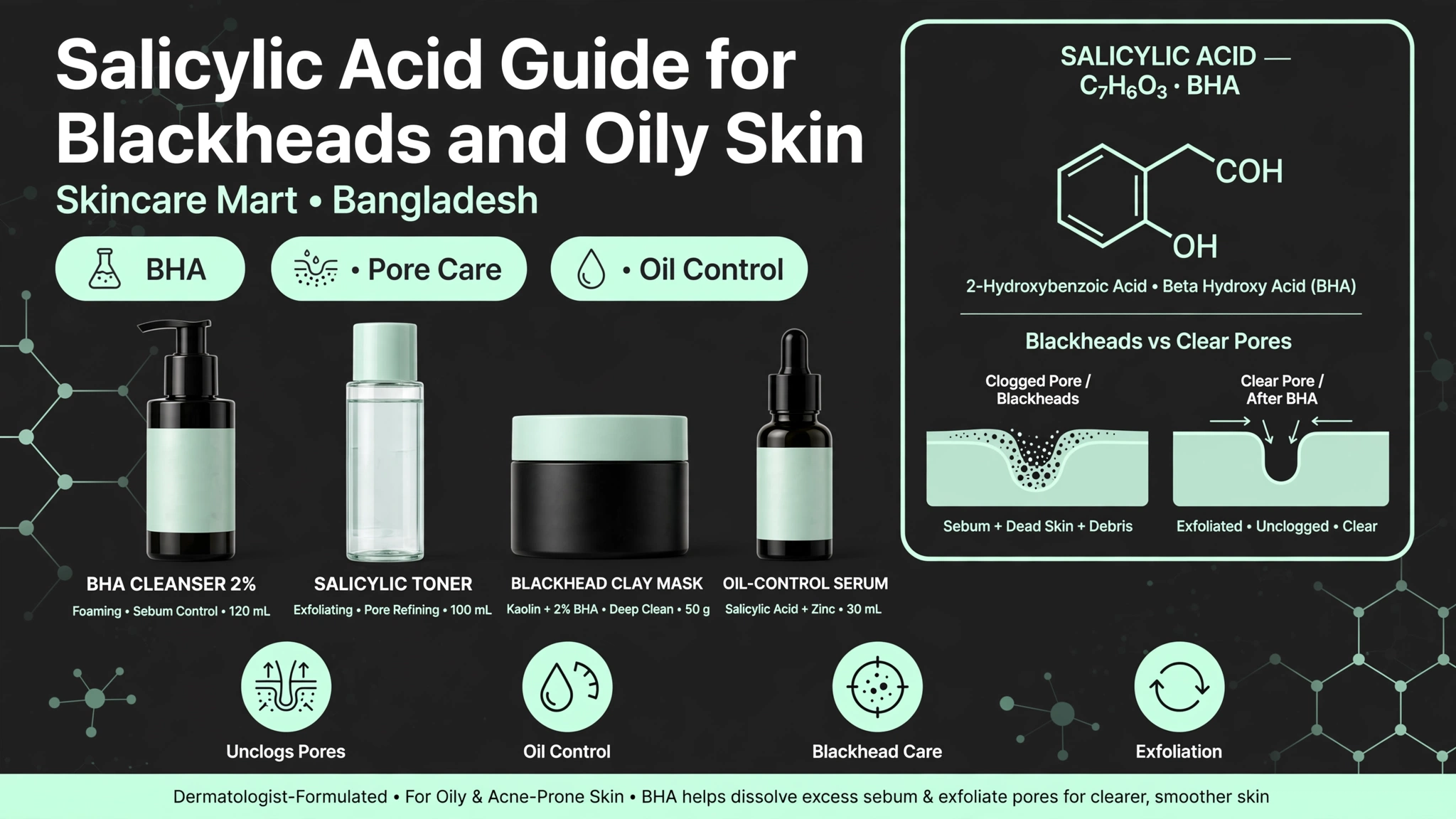
Blackheads form when a pore's opening stays exposed to air while the material trapped beneath it — oil and dead skin cells — oxidizes and darkens. Because salicylic acid is oil-soluble, unlike water-soluble alpha-hydroxy acids that mostly work on the skin's surface, it can travel down through the sebum lining a clogged pore and reach the blockage itself, rather than acting only at the surface. Once there, it works as a keratolytic — loosening the bonds between dead skin cells so the material can clear. The American Academy of Dermatology recommends salicylic acid for pustules, papules, blackheads, and whiteheads specifically for this reason.
Why it also helps with oily skin
Alongside unclogging pores, salicylic acid has been shown to decrease sebum production, which is part of why it's commonly recommended for oily and combination skin rather than blackheads alone. It also carries a chemical relationship to aspirin, giving it mild anti-inflammatory properties — useful for skin dealing with both blackheads and some inflamed breakouts at the same time.
What concentration to start with
| Concentration | Best suited for | Notes |
|---|---|---|
| 0.5% – 1% | Sensitive skin, beginners | Gentle enough for daily maintenance once tolerance is established |
| 1% – 2% | Normal to oily skin | The AAD's typical over-the-counter range; most face washes and leave-on treatments fall here |
| Above 2% | Persistent blackheads, targeted spot treatment | Higher-strength chemical peels above this range should only be performed by a trained dermatologist |
How to introduce it properly
Start with a low concentration (0.5–2%) applied once a day, or even every other day if your skin is sensitive, and increase frequency gradually — up to two or three times daily — only as your skin shows it tolerates the ingredient well. If you're using a leave-on treatment, apply it after cleansing and before moisturizer, and let it absorb fully before layering anything else on top. Salicylic acid works well as either a cleanser or a leave-on serum, but using both at once is generally not recommended, since it increases the risk of over-exfoliating and irritating the skin.
Bangladesh climate context
Heat and humidity increase sebaceous gland activity for much of the year in Bangladesh, and a Dhaka dermatologist has noted this effect intensifies further during monsoon season — conditions that tend to make blackheads and oiliness more persistent. That makes salicylic acid a reasonable year-round addition for oily and blackhead-prone skin here, though the same humid conditions can also make over-exfoliation more noticeable through excess dryness and flaking, so starting conservatively still matters even in a naturally oilier climate.
Using salicylic acid with other actives
Salicylic acid is generally safe to combine with most other skincare ingredients, but pairing it with a retinol or another strong exfoliant increases the risk of disrupting the skin barrier. A commonly recommended approach is alternating them — salicylic acid one day, retinol the next, or salicylic acid in the morning and retinol at night — rather than layering both at full strength together. Because salicylic acid can increase sun sensitivity, daily broad-spectrum sunscreen is essential alongside it, regardless of which time of day you use it.
Mistakes and cautions
- Starting at too high a frequency. Jumping straight to twice-daily use is one of the most common reasons people experience excess dryness or peeling and assume the ingredient doesn't suit them.
- Using a cleanser and a leave-on salicylic acid product together. This combination is more likely to cause irritation than to speed up results.
- Skipping sunscreen. Salicylic acid increases sun sensitivity, making daily SPF more important, not less, while using it.
- Layering it with retinol at full strength. Alternating use, rather than combining both in the same routine step, reduces the risk of barrier disruption.
- Expecting blackheads to disappear completely. Salicylic acid significantly reduces blackheads with consistent use but may not eliminate every one, particularly in areas prone to ongoing oil production.
Frequently asked questions
How long before salicylic acid clears blackheads?
Most people notice improvement within two to four weeks of consistent use, though full results — and preventing new blackheads from forming — depend on continued, regular use rather than a one-time treatment.
Can I use salicylic acid every day?
Many people work up to daily use, but it's best introduced gradually — starting once daily or every other day, then increasing frequency only if your skin tolerates it without excess dryness or irritation.
Is salicylic acid better than benzoyl peroxide for blackheads?
Salicylic acid is generally considered more effective for non-inflammatory blackheads and whiteheads specifically, since its oil-soluble nature lets it penetrate the pore itself, while benzoyl peroxide tends to work better on inflamed, red pimples.
What are the side effects of salicylic acid?
The most common side effects are mild burning, stinging, dryness, or peeling, generally linked to using too high a concentration or frequency too soon. True allergic reactions are uncommon but possible — stop use and seek medical advice if you notice hives, swelling, or difficulty breathing.
Can I use salicylic acid and niacinamide together?
Yes — niacinamide is generally well-tolerated alongside salicylic acid and doesn't carry the same barrier-disruption risk that combining two strong exfoliants or a retinoid can.
Should I use a salicylic acid cleanser or a leave-on treatment?
Both are effective; a cleanser offers gentler, more consistent low-level exposure, while a leave-on treatment gives more targeted, concentrated action. Dermatology guidance generally advises picking one rather than combining both to avoid over-exfoliating.
Getting started
Salicylic acid is one of the most reliably evidenced options for blackheads and oily skin, provided it's introduced gradually and paired with daily sunscreen. Browse Skincare Mart's cleanser and treatment categories for salicylic acid options at different concentrations, and check each product's usage instructions on its page before adding it to your routine.