Snail mucin has one of the odder origin stories in K-beauty — a slimy, sticky substance snails naturally produce to stay moist and protect themselves — and one of the more genuinely useful skincare functions once you get past that. It's also, less discussed, an ingredient that a small number of people should approach carefully, particularly if shellfish allergies run in the picture.
Quick answer: Snail mucin (also called snail secretion filtrate) is a hydrating, barrier-supporting ingredient rich in hyaluronic acid, glycoproteins, and allantoin, generally used for dryness, dullness, and irritated or sensitive skin. Most people tolerate it well, but board-certified dermatologists and allergists note that people with shellfish allergies, and possibly dust mite allergies, should be cautious, since a small number of users report reactions ranging from mild irritation to hives. As with any new ingredient, patch-test first and expect results — improved hydration and smoother texture — to build over several weeks rather than overnight.
Who this guide is for
This is for anyone curious about snail mucin or already using it and wanting to understand what it's actually doing. It's a general skincare ingredient guide, not a claim that snail mucin cures scarring, reverses aging, or treats a diagnosed skin condition — dermatologists describe its evidence as promising but still developing, and results vary by skin type and product formulation. If you have a known shellfish allergy, a history of skin allergies, or are pregnant or breastfeeding, talk to a dermatologist before adding it to your routine rather than relying on this guide alone.
What snail mucin actually is
Snail mucin is a fluid snails produce to stay moist and repair damage as they move. In skincare, it's purified and refined before use, and contains a natural mix of glycosylated proteins, polysaccharides, hyaluronic acid, allantoin, glycolic acid, and — in some formulations — copper peptides and growth factors. Most contemporary brands use cruelty-free collection methods that keep snails in calm, dark, stress-free conditions to naturally stimulate mucin production, though sourcing practices vary between brands, so checking a brand's stated process is worthwhile if this matters to you.
What it does for skin
- Hydration: The hyaluronic acid content draws moisture into the skin, and the lightweight texture in most formulations absorbs without a heavy or greasy feel.
- Skin barrier support: Allantoin and the ingredient's overall humectant profile help support skin that's dry, irritated, or recovering from other actives.
- Soothing: Commonly recommended for calming redness and irritation, including skin that's reactive to stronger actives elsewhere in a routine.
- Texture and tone support: Regular use is associated with improved texture and smoothness over time, though dermatologists are clear this builds gradually and isn't comparable in speed or intensity to stronger actives like retinoids.
Improved hydration and smoother-feeling skin are often noticeable relatively quickly, while any effect on fine lines or overall firmness takes longer and is more modest — worth keeping expectations realistic about, since marketing claims for this ingredient can run ahead of the evidence.
What the texture feels like in a routine
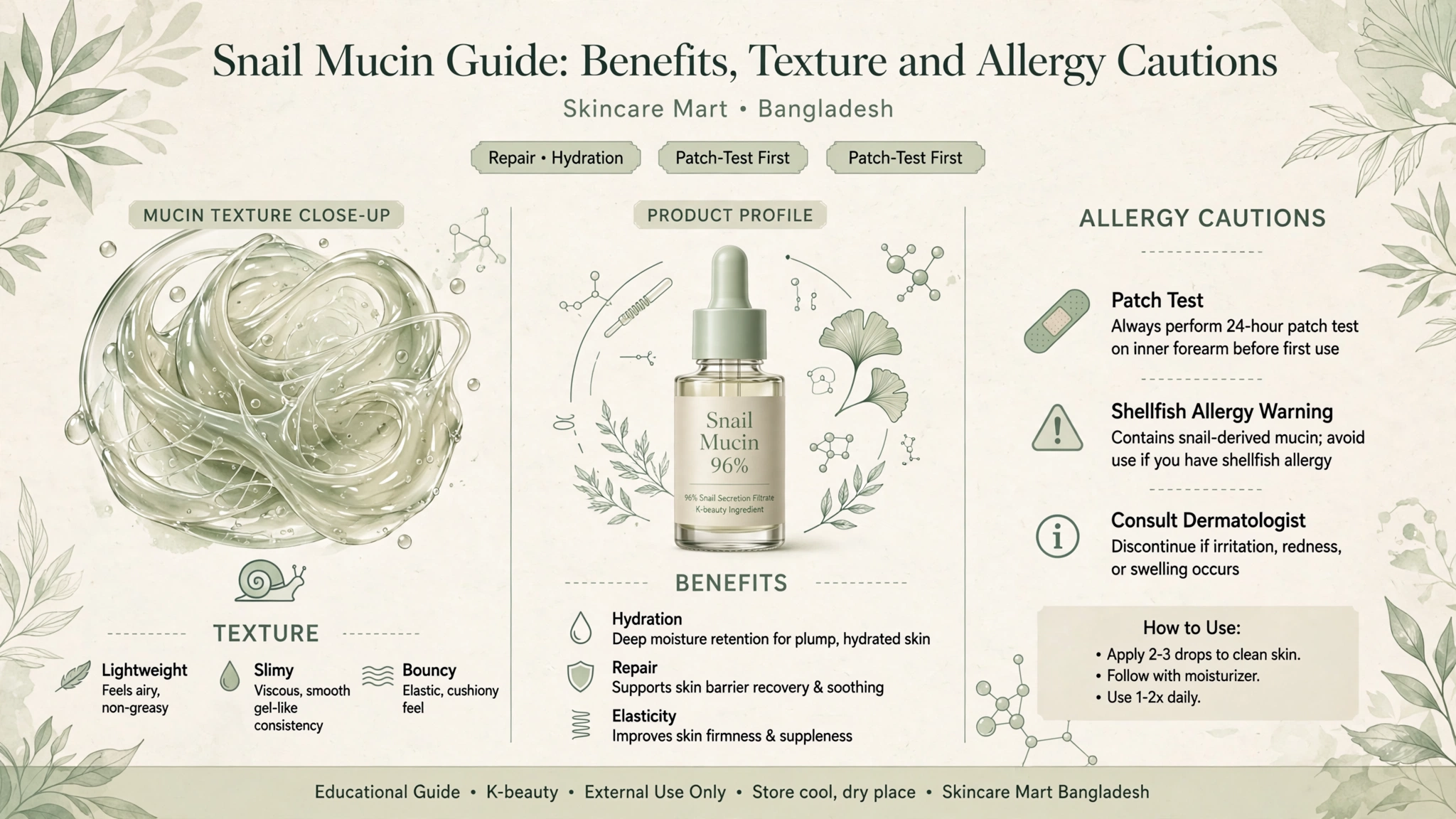
Most snail mucin products are formulated as a lightweight, slightly tacky essence or serum rather than a thick cream — the "slimy" reputation is mostly about the raw ingredient, not the finished product, which is usually designed to absorb cleanly. Richer, cream-format snail mucin products also exist and behave more like a standard moisturizer. Applying it to slightly damp skin and patting rather than rubbing it in is a commonly recommended technique, followed by a moisturizer on top to help lock the hydration in.
Allergy cautions: who should be careful
Snail mucin is generally well-tolerated, but it isn't risk-free for everyone. A few specific cautions are worth knowing:
- Shellfish allergy: Dermatologists and allergists commonly advise that people with a known shellfish allergy consult a dermatologist before using snail mucin, given a plausible cross-reactivity concern, even though snails and shellfish are biologically different.
- Dust mite allergy: Some users and allergists have reported a possible correlation between dust mite allergies and reactions to snail mucin, though this connection is less firmly established than the shellfish caution and worth discussing with an allergist if it applies to you.
- Fragrance sensitivity: Because raw snail mucin has a noticeable smell, added fragrance is common in finished products — and fragrance, not the mucin itself, is often the actual cause of a skin reaction. Checking the full ingredient list matters, especially for eczema-prone or sensitive skin.
- General reactions: Some users have reported hives, breakouts, or increased sensitivity after starting snail mucin, even without a known shellfish or dust mite allergy — another reason a patch test matters here as much as with any other active ingredient.
Bangladesh climate context
Snail mucin's lightweight, hydrating profile suits Bangladesh's climate reasonably well — it adds moisture without the heaviness of a rich cream, which matters given how much of the year is spent in heat and humidity. That said, during monsoon season, when a Dhaka dermatologist has noted increased sebaceous activity and breakout tendency, a lightweight snail mucin essence is generally a better fit than a heavier, cream-based snail mucin product for most skin types.
How to introduce snail mucin safely
- Check the ingredient list for added fragrance, and choose a fragrance-free option if you have sensitive or eczema-prone skin.
- Patch-test on a small area of skin — inner forearm or behind the ear — for 24 to 48 hours before applying it to your face.
- If you have a shellfish allergy or a strong dust mite allergy, check with a dermatologist before your first use rather than relying on a patch test alone.
- Apply to clean, slightly damp skin, patting rather than rubbing, and follow with a moisturizer to help seal in the hydration.
- Give it several weeks of consistent use before judging results — hydration and texture improvements tend to show up before anything else.
Mistakes and cautions
- Skipping the patch test because it's marketed as "gentle." A small number of users do react, including some without an obvious prior allergy.
- Ignoring a known shellfish allergy. This is the most consistently flagged caution across dermatology and allergist sources — check with a clinician first rather than assuming it's fine.
- Assuming the smell means the product is fine, fragrance-free, or "natural." Many products mask the raw ingredient's smell with added fragrance, which is a more common cause of irritation than the mucin itself.
- Expecting dramatic anti-aging results. Snail mucin's evidence base supports hydration and mild texture and barrier benefits more strongly than significant wrinkle reduction.
Frequently asked questions
Is snail mucin vegan or cruelty-free?
Not vegan, since it's an animal-derived ingredient, though most contemporary brands use collection methods designed not to harm the snails. Practices vary by brand, so checking a specific brand's sourcing is worthwhile if this matters to you.
Can I use snail mucin every day?
Yes, it's generally considered safe for daily use, morning and evening, and consistent use is typically how people see the most noticeable hydration and texture benefits.
Does snail mucin help acne scars?
Some sources point to snail mucin's soothing and skin-repair-supporting properties as helpful for the look of irritated or recovering skin, but it isn't a proven scar treatment, and marketing claims about scar reduction outpace the current evidence. For visible scarring, a dermatologist can discuss options with stronger evidence behind them.
What should I check on the label if I have sensitive skin?
Look specifically for fragrance-free formulations, since added fragrance — used to mask the ingredient's natural smell — is a more common trigger for irritation than the snail mucin itself.
Is snail mucin safe to use with retinol or other actives?
Generally yes — snail mucin's hydrating, barrier-supporting properties make it a reasonable complement to retinol rather than a replacement, and many people use it to help offset dryness from stronger actives.
How long before I see results from snail mucin?
Improved hydration and smoother texture are often noticeable within a couple of weeks, while any effect on fine lines or firmness takes longer — think in terms of weeks of consistent use, not days.
Getting started
Snail mucin is a genuinely useful hydrating ingredient for most people, provided you check the label for fragrance, patch-test first, and take shellfish or dust mite allergy history seriously if it applies to you. Browse Skincare Mart's essence and serum categories for snail mucin options, and check each product's full ingredient list on its page before adding it to your routine.